

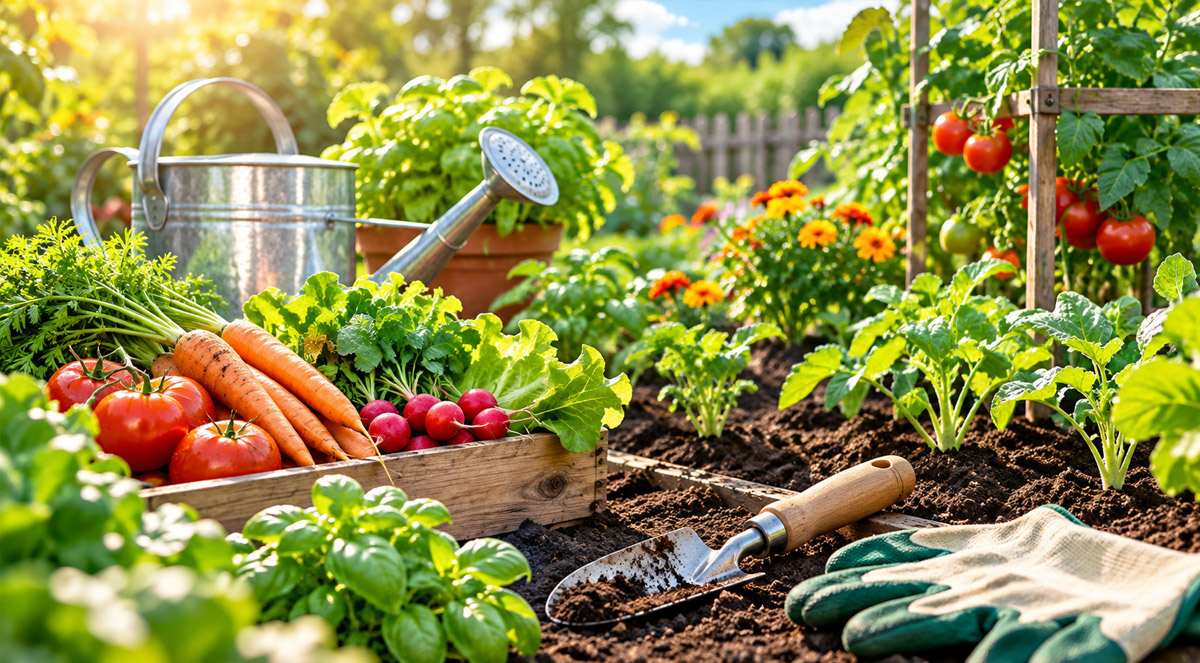
Organic gardening is more than simply avoiding synthetic chemicals. It is a way of working with nature rather than constantly trying to control it.
Instead of relying heavily on synthetic fertilizers, pesticides, and other chemical treatments, organic gardening focuses on building healthy soil, encouraging beneficial insects, choosing suitable plants, conserving resources, and creating an environment where plants can naturally thrive.
The good news is that you don’t need a huge garden, years of experience, or an expensive collection of equipment to get started. Even a few containers on a balcony can become an organic garden.
What Is Organic Gardening?
Organic gardening is a method of growing plants while using natural processes and materials as much as practical.
The foundation of an organic garden is healthy soil. Rather than treating soil simply as something that holds plants in place, organic gardeners view it as a living environment containing microorganisms, fungi, insects, and other organisms that contribute to plant health.
Organic gardening encourages this natural ecosystem by adding organic matter, using compost, protecting soil from unnecessary disturbance, and avoiding practices that can negatively affect beneficial organisms.
It is not about creating a completely pest-free garden. Instead, the goal is to maintain a healthy balance in which plants, insects, soil organisms, and other parts of the garden ecosystem can coexist.
Start With Healthy Soil
Good soil is one of the greatest assets an organic gardener can have.
Plants need nutrients, water, air, and suitable growing conditions around their roots. Healthy soil can provide these conditions while supporting the microorganisms that help make nutrients available to plants.
Adding compost is one of the simplest ways to improve garden soil. Homemade compost can be created from suitable kitchen and garden materials, while commercially produced compost can also be used.

Organic matter can improve soil structure, help retain moisture, and provide nutrients as it breaks down.
Before planting, take some time to understand the soil in your garden. If necessary, a soil test can provide useful information about its characteristics and nutrient levels.
Choose Plants That Suit Your Environment
One of the easiest ways to make gardening more successful is to choose plants that are naturally suited to your growing conditions.
Consider the amount of sunlight your garden receives, the typical temperature, rainfall, soil conditions, and available space. Plants that are well suited to their environment generally require less intervention than plants that constantly struggle to adapt.
Native and locally adapted plants can be particularly useful because they are often better suited to the conditions in the area where you live. They may also provide valuable food and habitat for local wildlife and pollinators.
Choosing the right plant in the first place can save you considerable effort later.
Use Compost Instead of Relying on Synthetic Fertilizers
Compost is one of the most useful resources in an organic garden.
As organic materials decompose, they create a nutrient-rich material that can be incorporated into garden soil or used around plants. Compost can also contribute to better soil structure and support soil life.
Kitchen scraps such as many fruit and vegetable leftovers can be composted along with suitable garden materials. However, not everything belongs in a home compost pile, so it’s important to understand what materials are appropriate for your particular composting system.
Over time, composting can also reduce the amount of organic waste sent to landfills.
Encourage Helpful Insects
Not every insect in your garden is a pest.
Ladybugs, lacewings, bees, butterflies, and many other insects can play valuable roles in a healthy garden. Some help pollinate plants, while others feed on insects that can damage crops.
Rather than trying to eliminate every insect you see, create an environment that encourages beneficial species.
Growing a variety of flowering plants, providing suitable shelter, and avoiding unnecessary pesticide use can help attract and support beneficial insects.
A garden with some insect activity is not necessarily an unhealthy garden. In many cases, biodiversity is one of its strengths.
Manage Pests Naturally
Pests are an inevitable part of gardening. The goal of organic pest management is not necessarily to eliminate every unwanted insect but to prevent pest populations from causing serious damage.
Start by regularly checking your plants. Look underneath leaves, inspect new growth, and pay attention to unusual spots, holes, discoloration, or wilting.
Catching a problem early can make it much easier to manage.
Removing damaged leaves, picking larger pests by hand, using physical barriers, encouraging beneficial insects, and maintaining healthy plants are among the approaches that can help.
If a treatment becomes necessary, choose an appropriate product carefully and follow its instructions. “Natural” does not automatically mean harmless, so organic gardening still requires responsible use of pest-control products.
Use Mulch to Protect the Soil
Mulching is another simple technique that can benefit an organic garden.
A layer of suitable organic mulch around plants can help reduce moisture loss, moderate soil temperature, suppress some weeds, and gradually add organic matter as it decomposes.
Materials such as shredded leaves, straw, untreated grass clippings, or suitable compost can be used depending on the garden and the plants being grown.
Keep mulch away from direct contact with plant stems and trunks, as excessive moisture around the base of some plants can create problems.
Save Water Whenever Possible
Organic gardening also encourages thoughtful use of natural resources.
Water plants deeply and appropriately rather than automatically watering them every day. The exact watering needs will depend on the plant, soil, climate, and season.
Watering early in the morning can help reduce evaporation and gives plants time to dry during the day. Drip irrigation and soaker hoses can also deliver water closer to the roots while reducing unnecessary water loss.
Collecting rainwater, where legal and practical, is another way gardeners can make better use of available water.
Avoid Disturbing the Garden More Than Necessary
Traditional gardening often involves frequent digging and turning of the soil. However, excessive soil disturbance can affect soil structure and the organisms living within it.
A more gentle approach is to disturb the soil only when necessary and add organic matter at the surface when appropriate.
Leaving fallen leaves or other organic material in suitable areas can also provide habitat and nutrients for organisms that contribute to the garden ecosystem.
Grow a Variety of Plants
Diversity can make a garden more resilient.
Growing different types of plants rather than filling an entire garden with a single crop can create a more varied environment for insects and other organisms. In vegetable gardens, crop rotation can also help manage certain soil and pest problems.
Flowers, herbs, vegetables, shrubs, and other plants can all have a place in an organic garden.
The more varied the garden, the more opportunities there are for different parts of the ecosystem to support one another.
Organic Gardening Can Start Small
You don’t need to transform your entire yard overnight.
Start with one flowerbed, a few containers, or a small vegetable patch. Improve the soil, choose plants carefully, observe what happens, and learn from the results.
One of the most enjoyable aspects of organic gardening is that there is always something to discover. You begin to notice which insects visit your flowers, how different plants respond to weather, how quickly compost changes, and how the soil improves over time.
Organic gardening is ultimately about creating a healthier relationship between the gardener and the natural environment.
By focusing on healthy soil, diverse plants, responsible pest management, efficient watering, and natural processes, you can create a garden that is productive, beautiful, and welcoming to wildlife.
And perhaps the best part is that you don’t have to fight nature to make it happen. You simply learn how to work with it. 🌿