

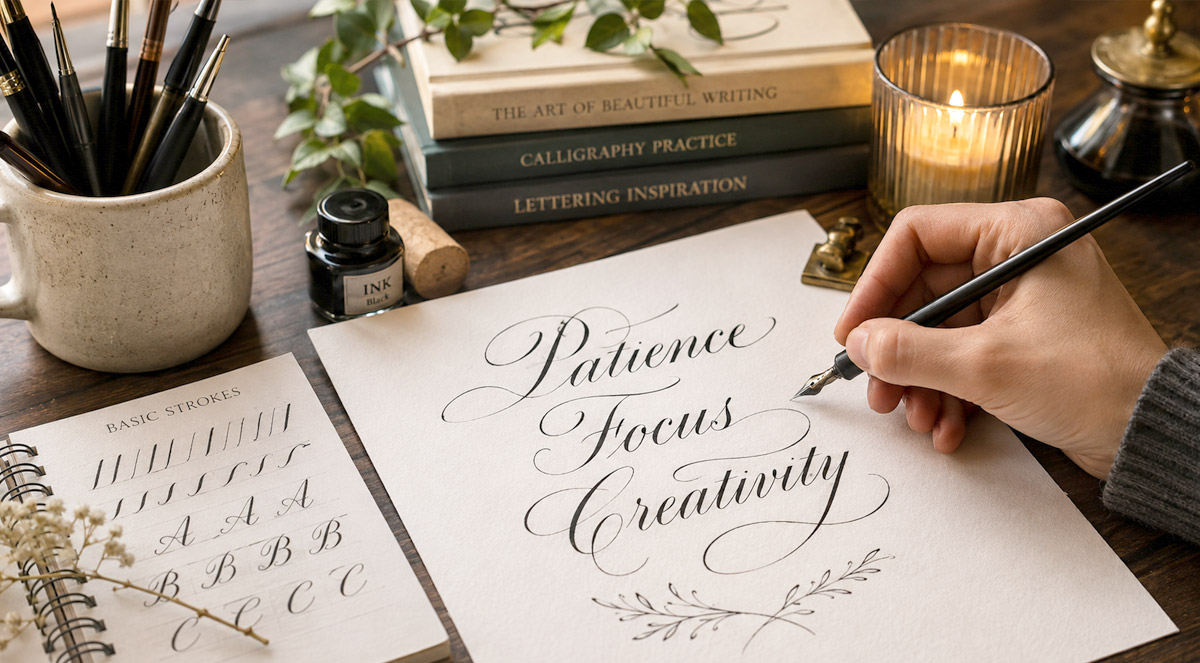
In today’s fast-paced digital world, finding activities that encourage mindfulness and concentration has become more important than ever. While many hobbies offer relaxation, calligraphy stands out as a creative practice that nurtures patience, sharpens focus, and provides a welcome escape from daily distractions.
Whether you’re using a traditional dip pen, a brush pen, or even practicing digital lettering, calligraphy is much more than beautiful handwriting. It is a mindful art form that challenges your attention to detail while rewarding consistency and perseverance.
If you’re looking for a hobby that benefits both your creativity and mental well-being, learning calligraphy may be the perfect place to start.
What Is Calligraphy?
Calligraphy is the art of decorative writing, where letters are carefully crafted with rhythm, balance, and precision. Unlike ordinary handwriting, calligraphy emphasizes deliberate movements and artistic expression.
From elegant wedding invitations to inspiring quotes and personalized gifts, calligraphy has remained popular for centuries and continues to attract beginners of all ages.
The beauty of calligraphy lies in its accessibility. You don’t need expensive equipment to begin—just a pen, some paper, and the willingness to practice.
Why Calligraphy Improves Patience
One of the first lessons every beginner learns is that calligraphy cannot be rushed.
Each stroke requires careful attention to pressure, angle, spacing, and consistency. Trying to hurry often leads to uneven letters and frustration, while slowing down produces smoother, more attractive results.
Over time, this teaches an important life skill: patience.
As you continue practicing, you’ll notice that improvement happens gradually. Every page becomes slightly better than the last, reinforcing the value of persistence rather than instant results.

Many people find that this slower pace carries over into everyday life, helping them approach challenges with greater calm and resilience.
How Calligraphy Strengthens Focus
Modern life constantly competes for our attention through notifications, emails, and social media.
Calligraphy demands something different: complete concentration.
When forming each letter, your mind naturally focuses on:
- Pen movement
- Letter spacing
- Stroke pressure
- Consistent angles
- Smooth rhythm
Because your attention is fully occupied, outside distractions begin to fade away.
Many calligraphy enthusiasts describe this experience as entering a “flow state,” where time seems to disappear and the mind becomes fully immersed in the activity.
Regularly practicing this level of concentration may help improve attention span over time while providing a healthy break from screen-heavy routines.
Calligraphy as a Form of Mindfulness
Mindfulness means being fully present in the current moment without judgment.
Interestingly, calligraphy naturally encourages this mindset.
Every stroke requires intention, breathing slows, and repetitive movements become almost meditative.
Unlike hobbies that involve constant stimulation, calligraphy invites stillness.
For many people, even 20 minutes of practice can feel surprisingly calming after a stressful day.
This combination of creativity and mindfulness is one reason calligraphy is increasingly recommended as a relaxing hobby for adults seeking healthier ways to unwind.
The Creative Benefits of Learning Calligraphy
Beyond improving patience and focus, calligraphy offers endless creative possibilities.
As your skills develop, you can create:
- Personalized greeting cards
- Wedding invitations
- Home décor
- Journal pages
- Gift tags
- Inspirational wall art
- Handmade bookmarks
- Social media graphics
Many artists eventually combine calligraphy with watercolor, illustration, or digital design, opening even more creative opportunities.
The satisfaction of creating something entirely by hand makes the hobby especially rewarding.
Building Confidence Through Practice
Every beginner struggles at first.
Crooked lines, inconsistent spacing, and shaky strokes are completely normal.
However, calligraphy provides visible evidence of progress.
If you compare your first practice sheet to one completed a few months later, the improvement is often remarkable.
This gradual growth builds confidence and reminds us that meaningful skills are developed through consistent effort—not perfection.
Tips for Beginners
If you’re thinking about learning calligraphy, keep these simple tips in mind:
- Start with basic strokes before practicing full letters.
- Practice for 15–20 minutes several times a week.
- Focus on consistency instead of speed.
- Use quality paper to improve results.
- Don’t compare your work to experienced artists.
- Enjoy the learning process rather than chasing perfection.
Remember, every expert calligrapher was once a beginner.
Why Calligraphy Is Worth Learning
Calligraphy is much more than a creative hobby.
It encourages patience in a world that values speed, improves concentration in an age of constant distractions, and offers a peaceful escape from everyday stress.
Whether your goal is to create beautiful artwork, develop a new skill, or simply enjoy a relaxing pastime, calligraphy provides lasting benefits for both the mind and the soul.
The greatest reward isn’t producing perfect letters—it’s discovering the satisfaction that comes from slowing down, practicing with intention, and watching your skills grow one stroke at a time.
Frequently Asked Questions
Is calligraphy difficult to learn?
Not at all. While mastering calligraphy takes practice, beginners can start creating attractive lettering with just a few basic strokes and regular practice.
How long does it take to become good at calligraphy?
Everyone learns at a different pace, but practicing for 15–30 minutes a few times a week can lead to noticeable improvement within a couple of months.
Do I need expensive tools?
No. A brush pen or beginner calligraphy pen, smooth paper, and practice worksheets are enough to get started.
Can calligraphy help reduce stress?
Yes. Many people find calligraphy relaxing because it encourages mindfulness, concentration, and slow, intentional movements that can help ease mental tension.
Final Thoughts
Learning calligraphy is about more than creating beautiful letters. It is an opportunity to slow down, cultivate patience, strengthen focus, and reconnect with your creative side. In a world filled with constant distractions, spending even a few minutes each day practicing calligraphy can become a meaningful ritual that supports both mental well-being and artistic growth.
Whether you’re exploring a new hobby, looking for a creative outlet, or searching for ways to improve mindfulness, calligraphy offers lasting rewards that extend far beyond the page.
SEO Keywords: how learning calligraphy can improve patience and focus, benefits of calligraphy, calligraphy for beginners, mindfulness hobbies, creative hobbies, calligraphy practice, relaxing hobbies, improve focus naturally, artistic hobbies, mental health hobbies.