

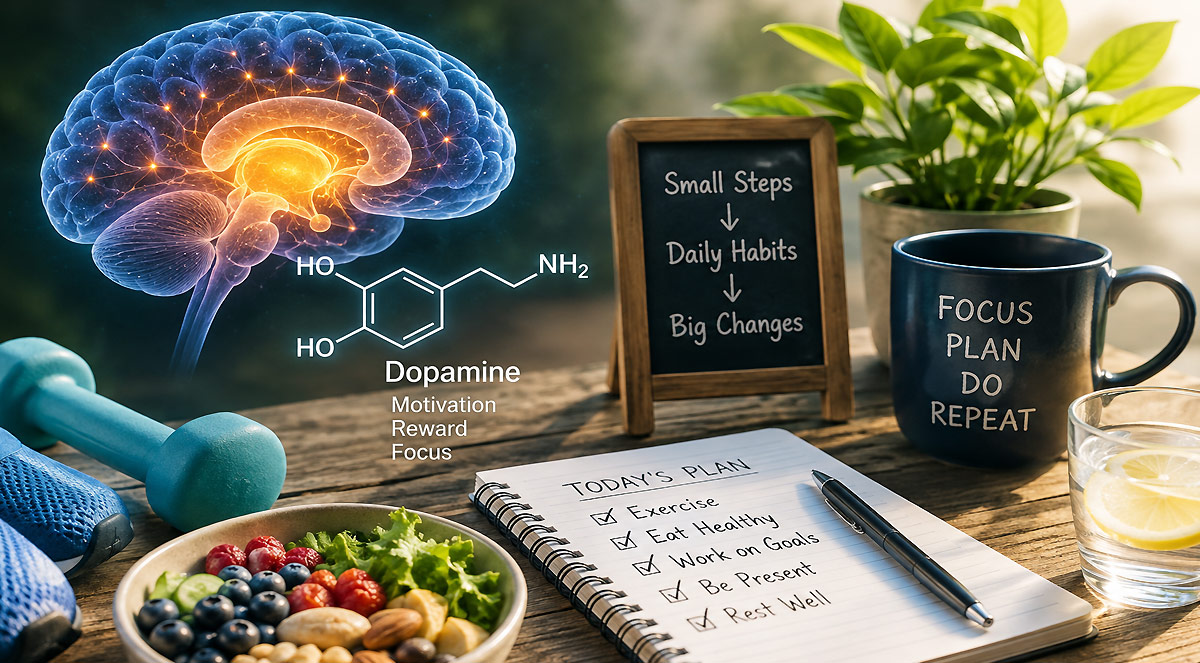
Have you ever wondered why some days you feel energized and motivated, while on others even the simplest tasks seem overwhelming? One important piece of the puzzle is dopamine, a naturally occurring chemical in your brain that plays a key role in motivation, learning, and reward.
Although dopamine is often called the “feel-good hormone,” that description isn’t entirely accurate. In reality, dopamine is more about driving you to take action than making you feel happy. Understanding how it works can help you build healthier habits, stay motivated, and improve your overall well-being.
What Is Dopamine?
Dopamine is a neurotransmitter—a chemical messenger that allows nerve cells in your brain to communicate with one another. It influences many essential functions, including movement, memory, attention, mood, and motivation.
Whenever you accomplish a goal, solve a problem, or complete a rewarding activity, your brain releases dopamine. This release reinforces positive behaviors, encouraging you to repeat them in the future.
How Dopamine Affects Daily Motivation
Contrary to popular belief, dopamine isn’t simply released when you receive a reward. It often increases before the reward, giving you the motivation to pursue it.
For example, if you’re excited about finishing a workout, completing a work project, or cooking a healthy meal, dopamine helps fuel your desire to get started. That’s why setting meaningful goals can make it easier to stay consistent.
When dopamine levels are disrupted, you may experience low motivation, difficulty concentrating, fatigue, or reduced interest in activities you once enjoyed.
Healthy Ways to Support Dopamine Naturally
The good news is that everyday lifestyle choices can help support healthy dopamine function.
Stay Physically Active
Regular exercise is one of the best natural ways to support brain health. Walking, strength training, cycling, or even dancing can encourage dopamine release while also reducing stress.
Prioritize Quality Sleep
Poor sleep can interfere with your brain’s dopamine system, making it harder to stay focused and motivated. Aim for seven to nine hours of quality sleep each night and maintain a consistent bedtime whenever possible.
Eat a Balanced Diet
Your body needs certain nutrients to produce dopamine. Foods rich in protein provide the amino acid tyrosine, which your body uses to make dopamine. Good choices include eggs, fish, poultry, dairy products, beans, nuts, and seeds.
A diet rich in fruits, vegetables, whole grains, and healthy fats also supports overall brain function.
Break Goals into Smaller Steps
Completing small tasks gives your brain frequent opportunities to experience a sense of accomplishment. Instead of focusing on one large goal, divide it into manageable milestones. Each completed step can provide a motivational boost that helps you keep going.
Spend Time Outdoors
Exposure to natural sunlight, fresh air, and green spaces has been linked to improved mood and better mental well-being. Even a short daily walk outside can help you feel more refreshed and motivated.
Can Too Much Instant Gratification Affect Dopamine?
Modern technology provides constant opportunities for quick rewards through social media, online shopping, video games, and endless scrolling. While these activities aren’t inherently harmful, relying on them too often may make everyday tasks feel less rewarding by comparison.
Creating healthy boundaries around screen time and balancing digital entertainment with meaningful offline activities can help maintain a healthier relationship with motivation.
The Bottom Line
Dopamine is an essential part of your brain’s motivation and reward system. Rather than being the “happiness chemical,” it’s better understood as the force that encourages you to pursue goals and develop positive habits.
Fortunately, you don’t need expensive supplements or complicated routines to support healthy dopamine levels. Regular exercise, nutritious food, quality sleep, time outdoors, and setting achievable goals are simple lifestyle habits that can naturally improve motivation over time.
By taking care of your body and mind each day, you can create an environment where motivation becomes easier to maintain—helping you build healthier habits and enjoy a more balanced, productive life.