

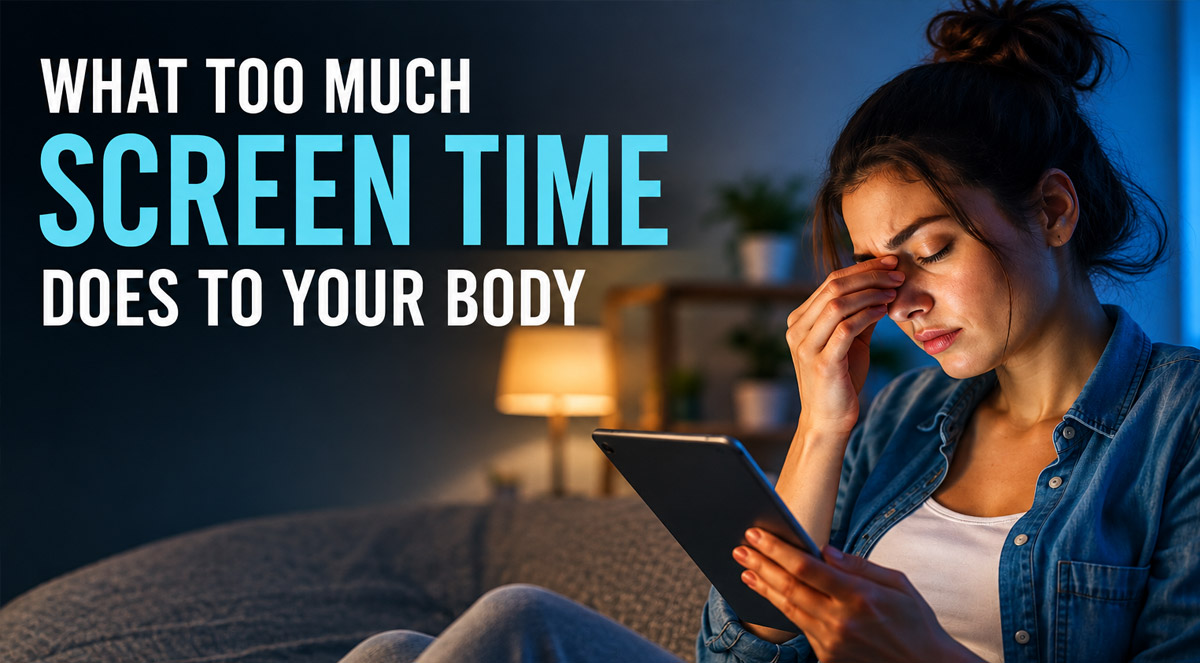
Screens are now part of almost every aspect of daily life. We use smartphones to communicate, computers to work, tablets to browse, and televisions to relax. While technology offers countless benefits, spending too much time sitting in front of a screen can also affect your health.
The effects of too much screen time can range from tired eyes and headaches to poor sleep, neck and back discomfort, reduced physical activity, and changes in eating habits. The good news is that small changes to your daily routine can help reduce these effects.
1. Your Eyes May Feel Tired and Dry
One of the most noticeable effects of prolonged screen use is digital eye strain. Staring at a screen for extended periods can contribute to tired, dry, irritated, or blurry eyes. People may also experience headaches or difficulty focusing.
When concentrating on a screen, you may blink less frequently, which can contribute to dry eyes. Poor lighting, glare, and an uncomfortable viewing distance can make the problem worse.
Taking regular breaks, adjusting screen brightness, reducing glare, and looking into the distance periodically can help give your eyes a rest.
2. Too Much Screen Time Can Affect Your Sleep
Late-night scrolling, watching shows, gaming, or working on a laptop can interfere with healthy sleep habits. Screen use can also encourage you to stay awake later than you intended, reducing the amount of time available for sleep.
Research involving teenagers has found that higher levels of non-school screen use are associated with irregular sleep routines and feeling less well-rested.
Creating a screen-free period before bed can make it easier to establish a consistent nighttime routine. Keeping your phone away from the bed can also reduce the temptation to check notifications during the night.
3. Your Neck, Shoulders, and Back Can Suffer
Have you ever looked down at your phone for a long time and suddenly noticed that your neck or shoulders hurt?
Poor posture during prolonged screen use can place additional stress on your neck, shoulders, back, and upper body. Sitting in the same position for hours can contribute to stiffness and discomfort.

A better workstation setup can make a difference. Keep your monitor at a comfortable height, support your back, keep your feet positioned comfortably, and change your position regularly. Taking movement breaks throughout the day is just as important.
4. Screen Time Often Means Less Physical Activity
Perhaps one of the biggest concerns isn’t the screen itself but what happens while you’re using it: you’re usually sitting still.
Hours spent watching videos, browsing social media, gaming, or working at a computer can replace time that might otherwise be spent walking, exercising, doing household activities, or simply moving around.
Regular physical activity is important for cardiovascular health, muscle strength, energy, and overall well-being. Current U.S. physical activity guidelines recommend that adults get 150–300 minutes of moderate-intensity aerobic activity per week, along with muscle-strengthening activities on at least two days.
The goal isn’t necessarily to eliminate screen time. It’s to make sure screen time doesn’t take over the time you could spend moving.
5. It May Influence Your Eating Habits
Screen time and eating often go together. You might snack while watching television, eat lunch while working at your computer, or scroll through your phone while having dinner.
When you’re distracted, it can become easier to eat mindlessly or continue eating after you’re comfortably full. Research in adolescents has also found associations between higher media use and behaviors such as nighttime eating and less healthy eating patterns.
Try occasionally making meals and snacks screen-free. Eating without distractions can help you pay more attention to what and how much you’re eating.
6. Your Mental Well-Being Can Be Affected
Not all screen time is the same. A video call with a friend, working on a creative project, reading an article, and endlessly scrolling through stressful social media content can have very different effects.
Still, high amounts of recreational screen use have been associated with several indicators of poorer well-being, particularly among teenagers. A recent CDC study found associations between higher non-school screen use and symptoms of anxiety and depression, reduced physical activity, irregular sleep, and lower perceived social and emotional support.
This doesn’t mean that screen time automatically causes mental health problems. Rather, excessive use may become one part of a larger pattern involving sleep, physical activity, social connection, and daily habits.
How to Reduce the Effects of Too Much Screen Time
You don’t need to completely disconnect from technology. Instead, focus on creating healthier screen habits.
Try taking short movement breaks during long periods of computer use. Follow extended screen sessions with a walk, stretch, or another physical activity. Keep meals occasionally screen-free, and consider establishing a technology-free period before bedtime.
For work, adjust your monitor and chair so that you aren’t constantly leaning forward or looking down. And when using your phone, try bringing it closer to eye level instead of keeping your head bent downward for long periods.
Most importantly, pay attention to how your body feels. Frequent headaches, persistent eye discomfort, ongoing neck or back pain, or significant sleep problems shouldn’t simply be ignored.
The Bottom Line
Technology isn’t going anywhere—and it doesn’t need to. The problem is usually not a single hour spent watching television or checking your phone. It’s the accumulation of long periods of sitting, staring at screens, staying up late, and replacing movement or face-to-face activities with digital ones.
The effects of too much screen time can show up in your eyes, sleep, posture, activity levels, eating habits, and overall well-being. The solution doesn’t have to be an extreme digital detox. Even simple habits such as taking regular breaks, moving more, protecting your sleep, and creating screen-free moments throughout the day can help you build a healthier relationship with technology.