
Healthy-looking hair doesn’t always require an expensive collection of products. Many simple hair-care habits and natural ingredients can help improve the appearance, softness, and manageability of your hair.
From scalp-friendly oils to nourishing foods and gentle washing habits, natural hair care is mostly about consistency and taking care of your hair without unnecessary damage.
If you’re looking for natural healthy hair remedies, here are some easy ways to support stronger, shinier, and healthier-looking hair.
1. Use Coconut Oil to Reduce Dryness
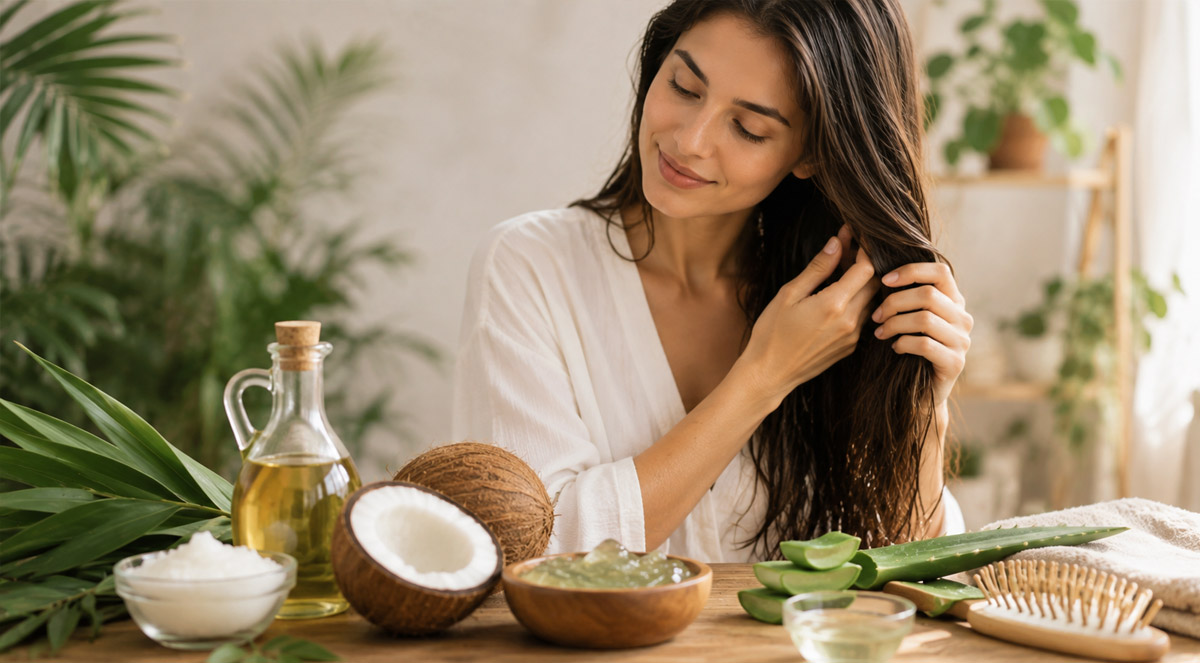
Coconut oil is one of the most popular natural ingredients for hair care. Its fatty acids can help coat the hair shaft and reduce moisture loss, making it particularly useful for dry or coarse hair.
For a simple treatment, warm a small amount of coconut oil between your hands and gently apply it to the lengths and ends of your hair. Leave it on for around 20–30 minutes before shampooing.
If your hair is fine or naturally oily, use only a small amount and avoid applying it heavily to the scalp.
2. Try Aloe Vera for a Fresh, Hydrated Scalp
Aloe vera is well known for its soothing and moisturizing properties. Pure aloe vera gel can be used as a simple scalp treatment, especially when your scalp feels dry or uncomfortable.
Apply a small amount of pure aloe vera gel to the scalp, leave it for about 15–20 minutes, and then rinse thoroughly.

Choose a product with minimal added ingredients if you’re not using fresh aloe vera.
3. Add More Protein and Healthy Fats to Your Diet
Hair is primarily made of a protein called keratin, so nutrition plays an important role in maintaining healthy hair.
Instead of relying only on topical treatments, make sure your diet includes enough protein-rich foods such as eggs, fish, Greek yogurt, beans, lentils, poultry, and nuts.
Healthy fats can also contribute to an overall balanced diet. Foods such as avocados, walnuts, seeds, and fatty fish provide nutrients that support general health, which in turn helps provide your body with the building blocks needed for normal hair growth.
4. Use an Egg Hair Mask Occasionally
Eggs contain protein and other nutrients, making them a popular ingredient in homemade hair treatments.
You can make a simple hair mask by mixing one egg with a small amount of plain yogurt or olive oil. Apply the mixture to the lengths of your hair and leave it on for approximately 15–20 minutes before rinsing thoroughly with cool or lukewarm water.
Avoid hot water, which can cause the egg to partially cook and make the mixture difficult to remove.
Keep in mind that an egg mask can make hair feel temporarily smoother, but it isn’t a proven treatment for hair loss or accelerated hair growth.
5. Give Your Hair an Olive Oil Treatment
Extra-virgin olive oil can work as a conditioning treatment for dry hair. Its emollient properties can help hair feel softer and more manageable.
Apply a small amount to the middle and ends of your hair, leave it for 20–30 minutes, and shampoo normally afterward.
You don’t need much. Using too much oil can leave your hair greasy and make washing more difficult.
6. Avoid Washing Your Hair With Very Hot Water
One of the simplest natural hair-care remedies doesn’t involve an ingredient at all.
Very hot water can strip oils from the hair and scalp, potentially leaving hair feeling dry. Instead, wash your hair with lukewarm water and finish with a cooler rinse if you find it comfortable.
Your ideal washing frequency depends on your hair type, scalp, hairstyle, and lifestyle. Someone with an oily scalp may need to wash more frequently than someone with dry or curly hair.
7. Be Gentle With Wet Hair
Wet hair is more vulnerable to stretching and breakage, so how you handle it after washing matters.
Instead of aggressively rubbing your hair with a towel, gently squeeze out excess water. A soft microfiber towel or T-shirt can be a gentler alternative.
Use a wide-tooth comb to carefully detangle the hair, starting at the ends and gradually working upward.
This small change can help reduce unnecessary mechanical damage.
8. Reduce Heat Styling
Hair dryers, straighteners, and curling irons can make styling easier, but frequent exposure to high temperatures can contribute to dryness and damage.
Whenever possible, allow your hair to air-dry partially before using a hair dryer. If you use heated styling tools, keep the temperature as low as practical and avoid repeatedly passing the tool over the same section of hair.
Reducing heat exposure is one of the most effective ways to support healthier-looking hair over time.
9. Massage Your Scalp
A gentle scalp massage can be a relaxing addition to your hair-care routine.
Using your fingertips, massage your scalp in small circular movements for several minutes. Avoid scratching with your fingernails or applying excessive pressure.
A scalp massage isn’t a guaranteed hair-growth treatment, but it can be a pleasant way to care for your scalp and incorporate a few relaxing minutes into your routine.
10. Don’t Overlook Your Sleep and Stress Levels
Healthy hair care isn’t only about what you put on your hair.
Long periods of significant stress can affect the normal hair-growth cycle, while inadequate nutrition and poor lifestyle habits can also affect overall health.
Prioritizing regular sleep, balanced meals, physical activity, and stress management can therefore be part of a broader approach to maintaining healthy hair.
Natural Hair Remedies: What Should You Avoid?
“Natural” doesn’t automatically mean safe for everyone.
Some popular DIY hair remedies can irritate the scalp or damage the hair if used incorrectly. Lemon juice, baking soda, undiluted essential oils, and harsh acidic mixtures are examples of ingredients that can cause problems for some people.
It’s also a good idea to patch-test a new topical ingredient before applying it extensively. If you experience burning, itching, redness, swelling, or other irritation, stop using it.
And remember: natural remedies aren’t a substitute for medical treatment when you’re experiencing significant hair loss, sudden thinning, bald patches, scalp inflammation, or other persistent changes.
How to Build a Simple Natural Hair-Care Routine
You don’t need to try every remedy at once.
Start with the basics: wash your hair according to your scalp’s needs, use gentle handling techniques, minimize excessive heat, eat a balanced diet, and protect your hair from unnecessary chemical or mechanical damage.
Then, if your hair tends to be dry, you might experiment with a small amount of coconut or olive oil as a pre-shampoo treatment. If your scalp feels dry or uncomfortable, aloe vera may be worth trying.
The key is to pay attention to how your own hair responds.
Final Thoughts
The best natural healthy hair remedies are often the simplest ones. Nourishing your body, caring for your scalp, reducing heat and chemical damage, and treating your hair gently can all contribute to healthier-looking hair.
Natural oils such as coconut and olive oil may help with dryness and manageability, while ingredients such as aloe vera can provide a soothing addition to a simple hair-care routine. However, no single home remedy can guarantee faster hair growth or prevent hair loss.
Ultimately, healthy hair starts with healthy habits. Give your routine time, avoid unnecessary damage, and choose treatments that suit your particular hair and scalp needs.