

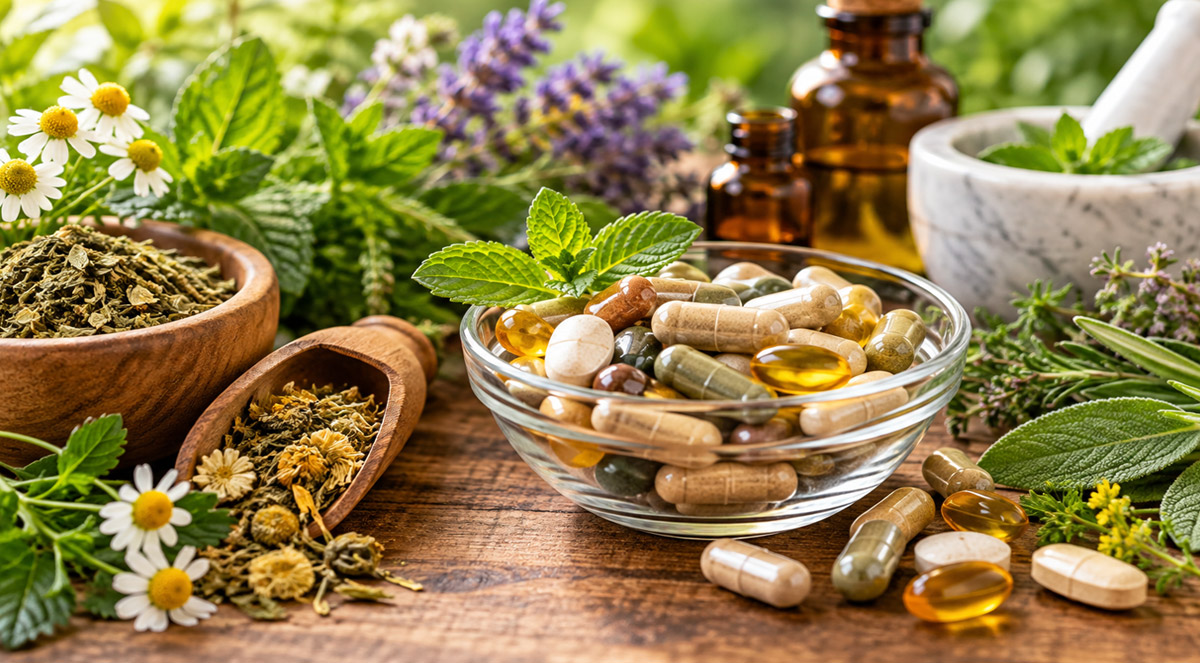
Walk into almost any health store or browse online and you’ll find shelves filled with herbal supplements promising everything from better sleep and less stress to improved digestion, weight management, and more energy.
Because they’re made from plants, herbal products are often perceived as a gentler or more natural alternative to conventional medicines. But there’s an important point to remember: natural doesn’t automatically mean safe or effective.
Herbal supplements can have real effects on the body. Some may offer benefits for specific health concerns, while others have limited scientific evidence behind them. They can also interact with medications, cause side effects, or contain ingredients that aren’t listed on the label.
So, before adding an herbal supplement to your daily routine, it’s worth understanding the potential benefits and risks.
What Is the Difference Between a Medicine and a Dietary Supplement?
Medicines are specifically intended to diagnose, treat, cure, or prevent disease and are subject to regulatory requirements that differ from those applied to dietary supplements.
Herbal supplements, on the other hand, are a type of dietary supplement. They may contain herbs or other botanical ingredients and are generally marketed to supplement the diet or support health rather than replace conventional medical treatment.
This distinction is important because dietary supplements do not go through the same premarket approval process as prescription and over-the-counter medicines.
For example, the U.S. Food and Drug Administration (FDA) does not generally approve dietary supplements for safety and effectiveness before they are marketed. Manufacturers are responsible for ensuring that their products comply with applicable safety and labeling requirements, while FDA primarily takes enforcement action after products reach the market.
That doesn’t mean every herbal supplement is unsafe. It does mean that consumers should be more careful about evaluating the product, its ingredients, and the evidence supporting its use.
Why Can Herbal Supplements Be Risky?
Plants contain biologically active compounds. Some of these compounds can affect the body in meaningful ways—which is precisely why certain herbs may have health effects.

The same activity, however, can also produce unwanted effects.
Herbal supplements may interact with prescription medications, over-the-counter medicines, or other supplements. In some cases, these interactions can reduce the effectiveness of a medication or increase its side effects. St. John’s wort, for example, is known to interact with numerous medications.
There is also a risk of contamination or adulteration. Some supplements, particularly products marketed for weight loss, sexual health, bodybuilding, or athletic performance, have been found to contain hidden pharmaceutical ingredients or other substances.
This is one reason why buying supplements from reputable manufacturers and being cautious about products making dramatic health claims is so important.
Does “Natural” Mean Safe?
Not necessarily.
One of the biggest misconceptions about herbal supplements is that something made from a plant must be harmless. In reality, some natural substances can have powerful—and potentially dangerous—effects on the body.
Kava is one example. It has been studied for anxiety, but various kava products have also been associated with rare cases of liver injury, including some that were serious or fatal.
Ephedra is another well-known example. Dietary supplements containing ephedrine alkaloids were promoted for weight loss and energy, but serious risks—including high blood pressure, heart attack, stroke, and seizures—led the FDA to ban their sale in the United States in 2004.
These examples don’t mean that all herbal supplements are dangerous. They demonstrate why a plant-based ingredient should be evaluated based on evidence and safety—not simply because it is labeled “natural.”
Talk to Your Doctor or Pharmacist First
If you’re considering an herbal supplement, especially if you take medication or have an existing health condition, talk with a doctor or pharmacist before using it.
This is particularly important if you take medications with a narrow therapeutic range, such as certain blood thinners or heart medications, because even relatively small changes in drug levels can sometimes have serious consequences.
It’s also important to tell your healthcare providers about all the supplements you take, including teas, powders, capsules, and herbal products. Keeping a list of the products, doses, and frequency of use can make it easier for your healthcare professional to identify potential interactions.
Follow the Recommended Dose
More isn’t necessarily better when it comes to supplements.
Always follow the directions on the product label unless a qualified healthcare professional has given you different instructions. Taking larger amounts can increase the risk of side effects, particularly when an ingredient has a strong biological effect.
Remember that people can respond differently to the same supplement. Factors such as age, medications, existing health conditions, pregnancy, and individual sensitivity can all influence how a product affects you.
If you experience an unusual or concerning reaction after starting a supplement, stop and seek appropriate medical advice.
Don’t Use Herbal Supplements as a Replacement for Medical Treatment
Perhaps the most important rule is this: don’t use an herbal supplement as a substitute for proven medical treatment.
A supplement may have evidence supporting a particular use, but that doesn’t mean it can treat every condition mentioned on its label or replace medication prescribed by your doctor.
Be especially skeptical of products that promise to cure serious diseases, dramatically lower blood sugar or cholesterol, cause rapid weight loss, or provide a “natural alternative” to essential medication. The FDA specifically warns that dietary supplements are not approved to treat or prevent diseases.
So, Are Herbal Supplements Worth the Risk?
There isn’t one answer for everyone.
Some herbal supplements may provide useful benefits when used appropriately, while others have little evidence supporting their advertised claims. The safety profile can also vary considerably from one herb to another.
The better question isn’t simply whether herbal supplements are “worth the risk.” Instead, ask:
What is the evidence that this particular supplement works, what are its potential risks, and could it interact with anything else I’m taking?
Before purchasing a product, look for reliable information about the specific ingredient, check the recommended dosage, choose a reputable manufacturer, and discuss its use with a healthcare professional when appropriate.
Herbal supplements can be part of a healthy lifestyle for some people, but they shouldn’t be treated as automatically safe simply because they come from nature. A little research and professional guidance can go a long way toward making smarter—and safer—choices.
Mrs. Jones
Thank you for keeping us safe and informed! Truly appreciate all of your hard work and knowledge and making it easy to understand.