

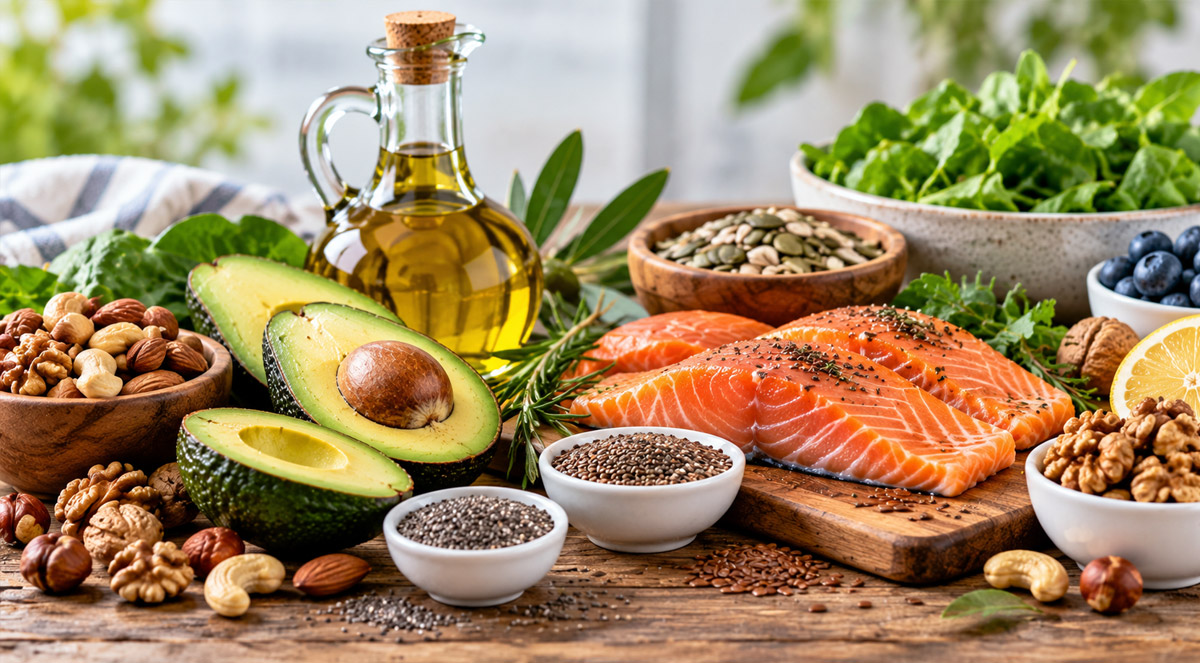
For years, dietary fat was often treated as something to avoid. Today, we have a much better understanding of its role in a healthy diet. Healthy fats are an essential part of good nutrition, and your body needs them for several important functions.
Dietary fat provides energy, helps your body absorb certain vitamins, supports the brain and nervous system, and contributes to the health of your cells. Fat also makes meals more satisfying and helps give foods much of their flavor and texture.
The goal isn’t to eliminate fat from your diet. Instead, it’s to choose nutritious sources of fat more often and be mindful of foods that contain large amounts of saturated or trans fats.
What Are Healthy Fats?
Healthy fats are generally fats that can be beneficial when they replace less nutritious sources of fat in your eating pattern.
Two types you’ll hear about most often are monounsaturated fats and polyunsaturated fats.
Monounsaturated fats are found in foods such as olive oil, avocados, almonds, peanuts, and other nuts. Polyunsaturated fats include omega-3 and omega-6 fatty acids, which are found in foods such as fatty fish, walnuts, seeds, and certain plant oils.
Some fats are essential because your body cannot produce enough of them on its own. Omega-3 fatty acids are particularly well known for their important roles in normal brain function and other aspects of health.
Why Does Your Body Need Fat?
Fat isn’t simply something your body stores. It performs several important jobs every day.
Fat Helps Your Body Absorb Vitamins
Vitamins A, D, E, and K are fat-soluble vitamins. This means dietary fat helps your body absorb them.
Eating vegetables such as carrots, spinach, or leafy greens with a source of healthy fat can therefore be a useful part of a balanced meal.

Fat Supports Brain and Nervous System Function
Your brain contains a large amount of fat, and certain fatty acids are important components of brain and nerve tissue.
Including sources of unsaturated fats in your diet can help provide the fatty acids your body needs as part of an overall nutritious eating pattern.
Fat Provides Energy
Fat is a concentrated source of energy. It contains more calories per gram than carbohydrates or protein, which is one reason portion size still matters—even when you’re choosing nutritious sources.
Fat Helps You Feel Satisfied
Adding a moderate amount of healthy fat to a meal can make it more satisfying. Combining healthy fats with protein, fiber-rich carbohydrates, fruits, and vegetables can help create balanced meals that keep you comfortably full.
Fat Supports Healthy Cells
Dietary fats are involved in the structure of cell membranes and several other normal processes throughout the body.
So while reducing excessive intake of certain fats can be beneficial, completely eliminating dietary fat isn’t the goal of a healthy diet.
Best Sources of Healthy Fats
You don’t need complicated recipes or expensive supplements to add healthy fats to your diet. Many everyday foods are naturally rich in beneficial unsaturated fats.
Fatty Fish
Salmon, sardines, mackerel, trout, and other oily fish are excellent sources of omega-3 fatty acids.
Including fish in your meals regularly is one practical way to increase your intake of these important fats while also getting high-quality protein and other nutrients.
Extra Virgin Olive Oil
Olive oil is a staple of Mediterranean-style eating and is rich in monounsaturated fat.
Use it in salad dressings, drizzle it over cooked vegetables, or use a moderate amount when preparing meals.
Avocados
Avocados provide monounsaturated fat along with fiber and several vitamins and minerals.
Add sliced avocado to whole-grain toast, salads, sandwiches, grain bowls, or simply enjoy it as part of a balanced meal.
Nuts and Seeds
Almonds, walnuts, pistachios, peanuts, chia seeds, flaxseeds, and pumpkin seeds provide healthy fats along with nutrients such as fiber, protein, vitamins, minerals, and antioxidants.
A small handful makes an easy snack, while nuts and seeds can also be added to oatmeal, yogurt, salads, and smoothies.
Nut and Seed Butters
Natural peanut butter, almond butter, and other nut or seed butters can be convenient sources of healthy fats.
When choosing them, check the ingredient list and look for products without large amounts of added sugar or unnecessary ingredients.
What About Saturated Fat?
Not all fats have the same effect on health.
Saturated fats are found naturally in foods such as butter, cheese, fatty cuts of meat, and full-fat dairy products. They can also be present in many highly processed foods.
This doesn’t mean you need to completely eliminate every food containing saturated fat. Instead, a healthy eating pattern generally emphasizes unsaturated fat sources while keeping saturated fat intake moderate.
For example, you might use olive oil more often instead of butter or choose fish, beans, or lean protein more frequently instead of fatty processed meats.
Don’t Forget About Trans Fats
Trans fats are a different matter. Industrially produced trans fats have been associated with increased cardiovascular risk and have been reduced or eliminated from many food supplies around the world.
Checking nutrition labels and choosing minimally processed foods can help you avoid products containing significant amounts of trans fats.
How Much Fat Should You Eat?
Healthy fats are nutritious, but that doesn’t mean more is always better.
Fat contains a relatively large amount of energy in a small volume, so portions can add up quickly. A generous pour of olive oil, several handfuls of nuts, or large amounts of cheese can significantly increase the calorie content of a meal.
Rather than trying to eat as much healthy fat as possible, think about balance and substitution.
For example, adding a small amount of olive oil to a vegetable-based meal can be a nutritious choice. Replacing highly processed foods or foods high in saturated fat with foods rich in unsaturated fats can also improve the overall quality of your diet.
Simple Ways to Add Healthy Fats to Your Diet
You don’t need to completely redesign your meals. A few simple changes can make healthy fats a regular part of your eating routine.
Try adding walnuts or chia seeds to your morning oatmeal. Top a salad with avocado and a simple olive-oil-based dressing. Choose salmon or sardines for dinner. Keep a small portion of unsalted nuts available for a convenient snack.
You can also replace creamy, heavy sauces with olive oil, herbs, lemon juice, or yogurt-based dressings.
Small changes like these are often easier to maintain than making drastic changes to your diet.
Healthy Fats and Weight Management
One common misconception is that eating fat automatically causes weight gain.
In reality, body weight is influenced by overall energy intake and expenditure, along with many other factors. Healthy fats can absolutely be part of a weight-conscious diet.
The important thing to remember is that nutritious foods still contain calories. If you’re trying to manage your weight, pay attention to portions rather than avoiding healthy fats altogether.
A meal containing vegetables, lean protein, whole grains, and a moderate amount of healthy fat can be both nutritious and satisfying.
Healthy Fats Are About Quality, Not Elimination
The idea that all dietary fat is unhealthy is outdated. Your body needs fat, and nutritious sources can be an important part of a balanced diet.
Instead of asking, “How can I eat as little fat as possible?”, a better question is, “Which sources of fat should I choose more often?”
Focus on foods such as fatty fish, olive oil, avocados, nuts, and seeds. At the same time, be mindful of highly processed foods and limit excessive amounts of saturated and trans fats.
A healthy diet doesn’t require perfection. It’s about the overall pattern of what you eat most of the time.
The Bottom Line
Healthy fats are an essential part of a balanced diet. They provide energy, support normal cell function, help your body absorb fat-soluble vitamins, and supply important fatty acids.
The best approach is not to avoid fat, but to choose your sources wisely. Make foods such as fish, avocados, nuts, seeds, and olive oil regular parts of your meals while keeping highly processed foods and excessive amounts of saturated and trans fats in check.
When combined with plenty of vegetables, fruits, whole grains, legumes, and quality sources of protein, healthy fats can fit naturally into a nutritious lifestyle.
Waterfallmagazine
Awesome website you have here but I was curious about if you knew of any discussion boards that cover the same topics discussed here? I'd really like to be a part of community where I can get suggestions from other experienced people that share the same interest. If you have any suggestions, please let me know. Cheers!