

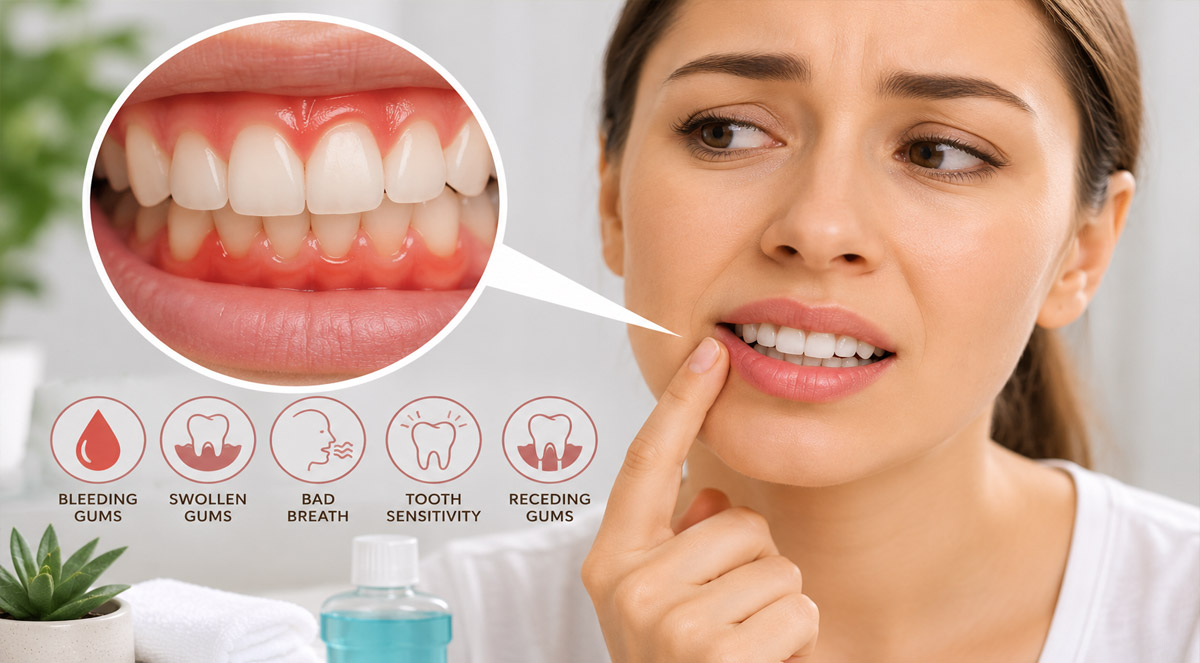
When people think about oral health, they often focus on their teeth. But healthy gums are just as important. Your gums provide support for your teeth and help protect the tissues underneath, yet early gum problems can sometimes develop without causing significant discomfort.
Knowing the warning signs can help you recognize potential problems before they become more serious. From bleeding while brushing to persistent bad breath, some changes in your gums shouldn’t simply be ignored.
Here are 10 signs that your gums may not be as healthy as you think.
1. Your Gums Bleed When You Brush or Floss
A small amount of bleeding during brushing or flossing is sometimes dismissed as normal, but healthy gums generally shouldn’t bleed regularly.
Bleeding can occur when plaque builds up along the gumline and irritates the gums. This can lead to inflammation and may be an early sign of gum disease.
If your gums frequently bleed, particularly despite regular brushing and flossing, it’s a good idea to have them checked by a dental professional.
2. Your Gums Look Red or Swollen
Healthy gums are generally firm and pink, although their natural color can vary from person to person.
Gums that appear unusually red, swollen, puffy, or tender may indicate inflammation. Plaque buildup is a common cause, but other factors can also contribute to gum irritation.
Pay attention to changes that persist rather than assuming they’re simply part of your normal oral health.
3. Your Gums Feel Tender
Occasional gum sensitivity can happen for several reasons, but persistent tenderness shouldn’t be ignored.

Inflamed gums may feel sore when brushing, flossing, or eating certain foods. Continuing to experience discomfort can be a sign that your gums need more attention.
Using a soft-bristled toothbrush and practicing gentle brushing can help reduce unnecessary irritation while you address the underlying cause.
4. You Have Persistent Bad Breath
Everyone experiences bad breath occasionally, especially after eating certain foods or waking up in the morning. However, persistent bad breath can sometimes be connected to oral health problems.
Bacteria and plaque around the teeth and gums can contribute to unpleasant odors. Poor tongue hygiene, dry mouth, cavities, and gum disease can also play a role.
If bad breath continues despite regular brushing, flossing, and tongue cleaning, consider discussing it with your dentist.
5. Your Gums Are Pulling Away From Your Teeth
If your teeth suddenly appear longer than they used to, your gums may have receded.
Gum recession can expose more of the tooth, including areas that are normally protected by gum tissue. It may occur because of gum disease, aggressive brushing, tobacco use, or other factors.
Because receding gums don’t simply grow back on their own, noticeable changes should be evaluated by a dental professional.
6. You Notice Increased Tooth Sensitivity
Sudden or increasing sensitivity to hot, cold, sweet, or acidic foods isn’t always caused by a problem with the tooth itself.
When gums recede, parts of the tooth that are normally protected can become exposed. These areas can be more sensitive than the visible crown of the tooth.
Sensitivity can have many possible causes, however, so persistent symptoms are worth discussing with a dentist.
7. Your Gums Feel Loose Around Your Teeth
Healthy gum tissue should fit snugly around the teeth. If your gums appear to be changing shape or no longer seem to fit closely around your teeth, it may indicate a problem.
Advanced gum disease can affect the tissues and bone that support the teeth. In some cases, teeth can eventually become loose.
Loose teeth in an adult should always be evaluated by a dental professional.
8. You Notice Pus or Unusual Discharge
Pus around the gums or between the gums and teeth can be a sign of infection and shouldn’t be ignored.
It may occur alongside swelling, redness, pain, or a bad taste in the mouth. These symptoms require professional dental attention rather than simply changing your toothbrush or using mouthwash.
If swelling is severe or accompanied by fever, facial swelling, or difficulty swallowing or breathing, seek urgent medical care.
9. Your Bite Feels Different
A noticeable change in the way your teeth fit together can sometimes be associated with changes in the tissues supporting the teeth.
Advanced gum disease can affect the structures that hold teeth in place, potentially contributing to changes in tooth position or how the bite feels.
A new or persistent change in your bite is worth mentioning to your dentist, particularly if you also have bleeding, swelling, or loose teeth.
10. You Have Ongoing Gum Problems Despite Good Oral Hygiene
Sometimes people brush twice a day, floss regularly, and still notice bleeding, swelling, tenderness, or other gum changes.
That’s an important reason not to assume that every gum problem can be solved simply by brushing harder or using more products.
Your dentist can assess your gums, identify plaque or tartar that can’t be removed with normal brushing, and determine whether another underlying issue may be contributing to your symptoms.
What Do Healthy Gums Look Like?
Healthy gums are generally firm, comfortable, and fit closely around the teeth. They typically don’t bleed during normal brushing or flossing, and they shouldn’t be persistently swollen or painful.
Of course, everyone’s natural gum color and appearance can vary. What’s most important is noticing changes from what is normal for you.
How Can You Keep Your Gums Healthy?
Good gum care starts with a consistent daily routine. Brush your teeth twice a day using a soft-bristled toothbrush and fluoride toothpaste, and clean between your teeth regularly with floss or another appropriate interdental cleaner.
Cleaning your tongue can also help reduce bacteria that contribute to bad breath. Limiting frequent sugary foods and drinks, avoiding tobacco products, staying hydrated, and maintaining regular dental checkups can further support good oral health.
It’s also important to avoid brushing too aggressively. More pressure doesn’t necessarily mean cleaner teeth and can irritate the gums or contribute to gum recession.
When Should You See a Dentist?
Don’t wait for severe pain before paying attention to your gums. Bleeding, persistent swelling, recurring tenderness, gum recession, pus, loose teeth, or ongoing bad breath are all good reasons to schedule a dental evaluation.
Early attention can make it easier to identify and manage gum problems before they become more advanced.
The Bottom Line
Your gums can give you important clues about your overall oral health. Regular bleeding, redness, swelling, persistent bad breath, gum recession, sensitivity, or changes around your teeth shouldn’t automatically be considered normal.
The best protection is a combination of good daily oral hygiene and regular professional dental care. Paying attention to small changes today can help you maintain healthier gums and a healthier smile for years to come.