
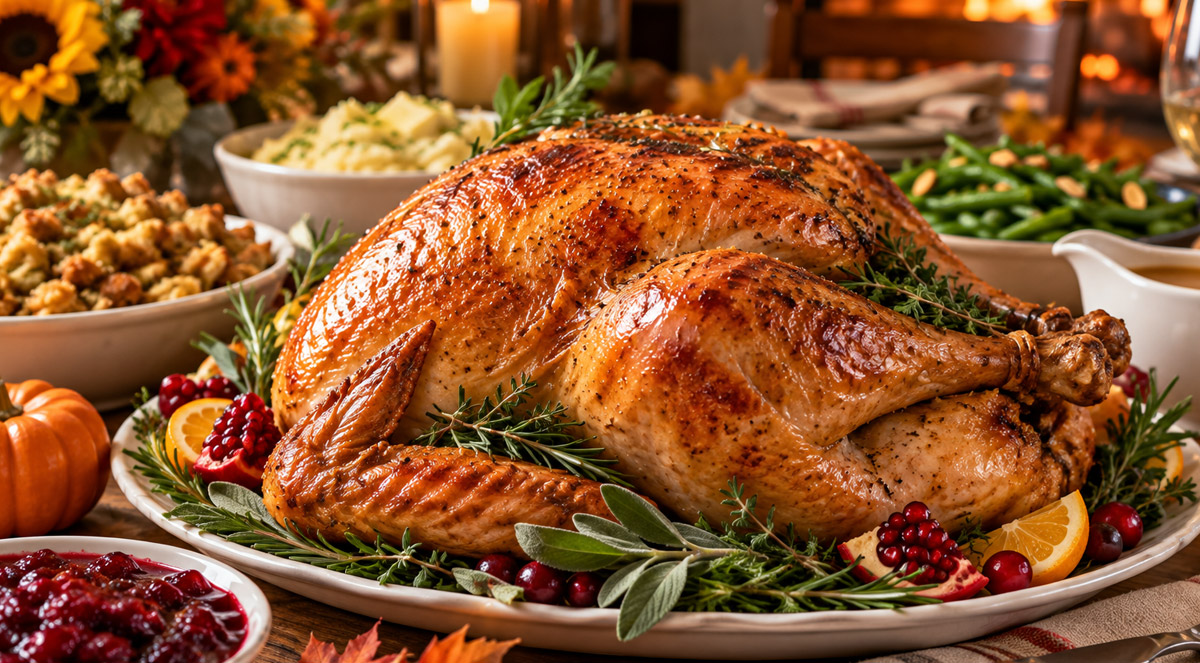
Few meals feel as special as a beautifully roasted turkey surrounded by family and friends. With its golden skin, tender meat, and fragrant herbs, a traditional roast turkey makes a wonderful centerpiece for Thanksgiving, Christmas, or any special gathering.
This classic recipe keeps things simple by using fresh or dried rosemary, thyme, and sage to season the turkey from the inside out. Starting the turkey at a higher temperature helps the skin begin to brown, while lowering the oven temperature allows the meat to roast more gently.
The result is a flavorful roast turkey that looks impressive on the table without requiring complicated preparation.
Traditional Roast Turkey Recipe
Prep time: 20 minutes
Roasting time: About 3 hours
Resting time: 15–20 minutes
Total time: About 3½ hours
Oven temperature: 425°F, then 325°F
Servings: Approximately 12–24, depending on portion size
Ingredients
- 1 whole turkey, 12–14 pounds, completely thawed
- 1 tablespoon fresh rosemary, finely chopped, or 1 teaspoon dried rosemary, crushed
- 1 tablespoon fresh thyme, finely chopped, or 1 teaspoon dried thyme, crushed
- 1 tablespoon fresh sage, finely chopped, or 1 teaspoon dried sage, crushed
- ½ teaspoon salt
- ½ teaspoon freshly ground black pepper
- 1 tablespoon olive oil
- Fresh rosemary sprigs, for garnish
- Fresh thyme sprigs, for garnish
- Fresh sage leaves, for garnish
- Pomegranate arils or pieces, optional, for garnish
How to Roast a Turkey
1. Prepare the Turkey
Preheat the oven to 425°F.
Remove the turkey from its packaging and take out the neck and giblets from the body cavity. Pat the turkey thoroughly dry with paper towels. Dry skin will help the turkey develop better browning during roasting.
In a small bowl, combine the rosemary, thyme, sage, salt, and black pepper.
Rub about half of the herb mixture inside the turkey cavity.
If desired, gently pull the neck skin toward the back of the turkey and secure it with a skewer. Tuck the wing tips underneath the turkey and, if the skin allows, tuck the ends of the drumsticks underneath the skin flap near the tail.
If there is no suitable skin flap, you can loosely tie the drumsticks together with 100% cotton kitchen twine.

2. Season and Position the Turkey
Place the turkey breast-side up on a rack inside a shallow roasting pan.
Brush the outside of the turkey with the olive oil, then season it evenly with the remaining herb mixture.
For the most reliable way to check doneness, insert an oven-safe meat thermometer into the thickest part of the thigh, making sure the thermometer does not touch bone.
Loosely cover the turkey with aluminum foil.
3. Roast the Turkey
Place the turkey in the preheated 425°F oven.
After approximately 30 minutes, reduce the oven temperature to 325°F and continue roasting.
Remove the foil approximately 45 minutes before you expect the turkey to be finished. This allows the skin to brown and become crisp.
Roasting time will vary depending on the size of the turkey and your oven. A 12–14-pound turkey will generally take around 2¾ to 3½ hours when roasted at 325°F after the initial high-temperature period.
Don’t rely on time alone, however. The most important indication that the turkey is ready is its internal temperature.
The thickest part of the turkey should reach 165°F when measured with a food thermometer. Check the temperature in more than one location if necessary, particularly the thickest part of the breast and the innermost part of the thigh.
4. Let the Turkey Rest
When the turkey reaches the appropriate internal temperature, carefully remove it from the oven.
Transfer it to a large cutting board or serving platter and loosely cover it with foil.
Allow the turkey to rest for 15–20 minutes before carving.
Resting gives the juices time to redistribute throughout the meat and also makes carving easier.
5. Carve and Serve
Remove the kitchen twine, if used, and carve the turkey with a sharp carving knife.
Arrange the slices on a large serving platter and garnish with fresh rosemary, thyme, sage, or pomegranate arils for a festive presentation.
Serve with your favorite traditional side dishes, such as roasted vegetables, mashed potatoes, stuffing, cranberry sauce, gravy, or a fresh green salad.
Tips for Making the Best Roast Turkey
Make Sure the Turkey Is Fully Thawed
If you’re using a frozen turkey, allow enough time for it to thaw completely in the refrigerator before roasting. A partially frozen turkey will cook unevenly and can significantly increase the cooking time.
Pat the Skin Dry
Don’t skip this simple step. Removing excess moisture from the skin before adding the oil and seasonings helps encourage better browning and crisping.
Use a Meat Thermometer
A meat thermometer is much more reliable than judging doneness by the color of the juices or how easily the drumsticks move.
Turkey should reach 165°F in the thickest parts for food safety. Check the temperature carefully without touching bone, as bone can interfere with an accurate reading.
Don’t Open the Oven Too Often
Every time you open the oven door, heat escapes. Try to limit unnecessary checking and use the oven light and thermometer to monitor the turkey instead.
Let It Rest Before Carving
It can be tempting to start carving immediately, especially when everyone is waiting for dinner. Giving the turkey 15–20 minutes to rest can make the meat easier to slice and helps retain more of its juices.
Can You Prepare the Turkey Ahead of Time?
Some preparation can be done in advance to make the cooking day less stressful.
You can prepare the herb mixture ahead of time and have your roasting pan, rack, thermometer, and other equipment ready before the turkey goes into the oven.
For the best results, however, roast the turkey close to serving time. If you need to cook it ahead, slice the meat and store it properly in the refrigerator, then reheat it gently with some broth or gravy to help prevent it from drying out.
How to Store Leftover Turkey
Refrigerate leftover turkey within 2 hours of cooking. Store it in shallow, airtight containers or tightly covered dishes.
Leftover turkey can be used in sandwiches, soups, salads, casseroles, wraps, and many other meals.
You can also use the meat to create an entirely new dinner the following day, making a large roast turkey especially useful for holiday gatherings.
Frequently Asked Questions
How long does it take to roast a 12–14-pound turkey?
A 12–14-pound turkey generally takes around three hours, although the exact time can vary depending on the oven, the turkey’s starting temperature, and other factors. Use an internal temperature of 165°F as the final indication of doneness rather than relying solely on the clock.
What temperature should a turkey be cooked to?
The turkey should reach 165°F in the thickest parts of the meat when checked with a food thermometer. Measure the thickest part of the breast and the innermost part of the thigh without touching bone.
Should I cover my turkey while roasting?
Loosely covering the turkey with foil during the earlier part of roasting can help prevent excessive browning. Removing the foil toward the end allows the skin to brown and crisp.
Should I wash the turkey before cooking?
There’s no need to rinse a raw turkey. Washing poultry can spread raw juices and bacteria around the kitchen. Instead, simply remove the giblets and pat the turkey dry with paper towels before seasoning.
How long should a roast turkey rest?
Allow the turkey to rest for approximately 15–20 minutes before carving. This also gives you time to finish preparing side dishes and gravy.
Nutrition Information
Approximate nutrition information per serving:
Calories: 229
Total fat: 7 g
Saturated fat: 2 g
Cholesterol: 137 mg
Sodium: 123 mg
Carbohydrates: 0 g
Dietary fiber: 0 g
Protein: 38 g
Nutrition information is an estimate and can vary depending on the size of the serving, the specific turkey used, and preparation methods.
A Classic Centerpiece for Any Special Occasion
A traditional roast turkey doesn’t need complicated ingredients or elaborate techniques to become the star of a special meal. A handful of fresh herbs, olive oil, careful roasting, and a little patience are enough to create a flavorful centerpiece for the dinner table.
The most important tips are simple: start with a fully thawed turkey, season it generously, use a meat thermometer to check for doneness, and give the turkey time to rest before carving.
With those basics in place, you’ll have a beautifully roasted turkey that’s ready to share with family and friends.