

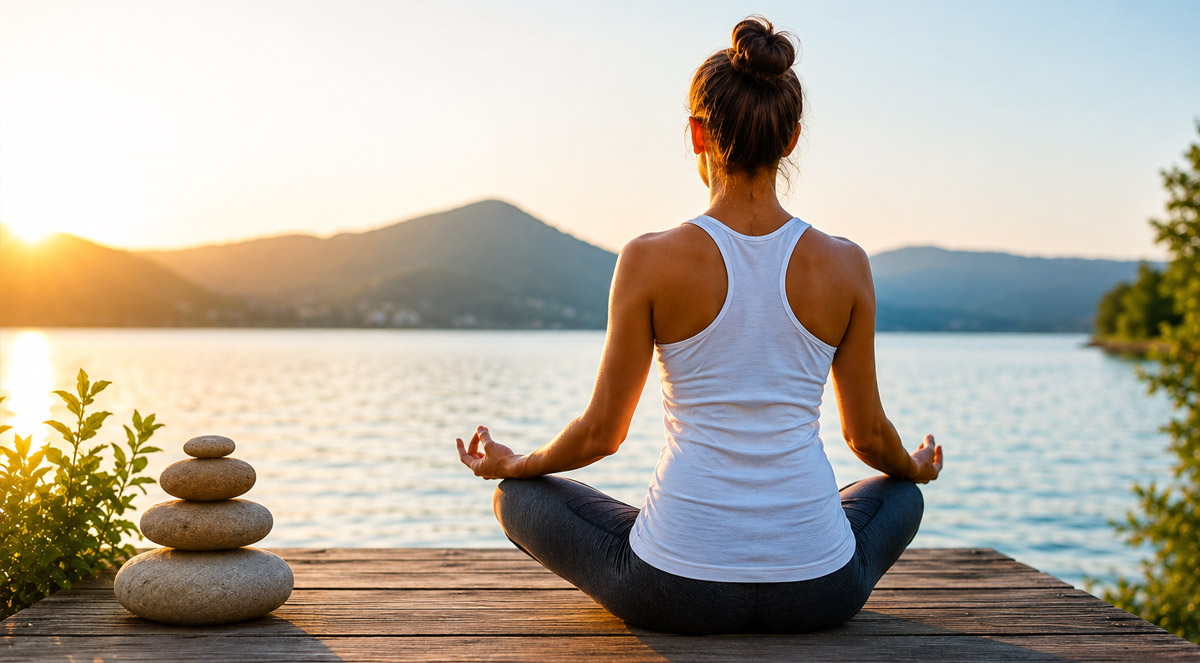
In a world filled with constant notifications, busy schedules, and endless responsibilities, finding a few moments of quiet can feel almost impossible. Yet taking even a short amount of time to slow down, breathe, and focus your attention may have meaningful benefits for both your mind and body.
Meditation has been practiced for thousands of years, and today it has become a popular wellness practice around the world. Modern research suggests that meditation and mindfulness may help reduce stress, support emotional well-being, improve sleep, and provide other potential health benefits.
But what exactly happens when you meditate, and how can this simple practice become part of a healthy lifestyle?
What Is Meditation?
Meditation is an umbrella term for a variety of practices designed to encourage focused attention, awareness, and a greater sense of calm. Depending on the technique, meditation may involve focusing on your breathing, repeating a word or phrase, observing your thoughts, concentrating on bodily sensations, or simply paying attention to the present moment without judgment.
Mindfulness meditation is one of the most widely practiced forms. Rather than trying to completely empty your mind, mindfulness encourages you to notice your thoughts, feelings, and sensations as they arise and gently return your attention to the present.
The goal isn’t necessarily to stop thinking. Instead, it is to develop a different relationship with your thoughts.
How Does Meditation Affect the Body?
Stress activates the body’s “fight-or-flight” response. During periods of stress, heart rate, breathing, blood pressure, and muscle tension can increase. When stress becomes persistent, it may contribute to problems such as sleep difficulties, headaches, digestive issues, anxiety, and other health concerns.
Meditation and other relaxation practices may encourage the body’s relaxation response. This response is associated with a slower heart rate, lower blood pressure, and reduced physiological signs of stress.
This doesn’t mean that meditation can eliminate stress or prevent every health problem. Instead, regular meditation may provide one practical tool for helping the mind and body respond to everyday challenges.
Meditation and Stress Reduction
One of the most commonly reported reasons people meditate is to manage stress.

When you’re constantly thinking about work, finances, relationships, responsibilities, or future problems, your mind may rarely get a chance to slow down. Meditation gives you an opportunity to step away from that constant mental activity for a few minutes.
Research suggests that mindfulness-based practices may reduce perceived stress and can also help with symptoms associated with anxiety and depression.
Even a short meditation session can become a useful transition between a stressful part of your day and a calmer one.
Meditation and Mental Health
Mental and emotional well-being are closely connected to overall health. Persistent anxiety, low mood, and psychological stress can affect sleep, concentration, motivation, relationships, and everyday quality of life.
Studies of mindfulness-based approaches have found potential benefits for symptoms of anxiety and depression. Some research suggests these approaches can perform better than no treatment and may have effects comparable to established therapies in certain circumstances, although results vary and meditation should not automatically be considered a substitute for professional treatment.
For many people, meditation can therefore work as a complementary wellness practice alongside other healthy habits and, when needed, professional care.
Can Meditation Improve Sleep?
If you struggle to switch off at night, meditation may be worth exploring.
Racing thoughts and daily stress can make it difficult to relax before bedtime. Mindfulness meditation may help by encouraging you to focus on the present rather than repeatedly thinking about the past or worrying about the future.
Research reviewed by the National Center for Complementary and Integrative Health suggests that mindfulness meditation may improve sleep quality and reduce insomnia symptoms.
A simple breathing or body-scan meditation before bed can be an easy way to create a calming nighttime routine.
Meditation and Blood Pressure
There is also evidence suggesting that meditation may have a positive effect on certain cardiovascular measures, including blood pressure.
Some studies have reported reductions in blood pressure among people practicing meditation or mindfulness-based programs. However, researchers emphasize that the evidence is not strong enough to determine exactly how meditation affects blood pressure or whether one meditation technique is superior to another.
For this reason, meditation should be viewed as a potential addition to a healthy lifestyle rather than a replacement for prescribed blood-pressure treatment.
Regular physical activity, a balanced diet, adequate sleep, and appropriate medical care remain important parts of cardiovascular health.
Meditation and Pain Management
Pain is another area where meditation has been studied extensively.
Mindfulness may change the way people pay attention to and respond to uncomfortable sensations. Some research has found benefits for certain types of chronic pain, while studies involving acute pain have produced more mixed results.
This distinction is important. Meditation shouldn’t be presented as a universal pain treatment, but it may be a useful complementary technique for some people dealing with ongoing discomfort.
Can Meditation Help With Eating Habits?
Meditation isn’t a magic weight-loss technique, but mindfulness may help people become more aware of their eating behaviors.
Mindful eating encourages you to slow down and pay attention to hunger, fullness, taste, texture, and emotional triggers instead of eating automatically. Research has suggested that mindfulness-based programs may help with eating behaviors such as emotional eating, binge eating, and other eating-related patterns.
This greater awareness can make it easier to recognize the difference between physical hunger and eating triggered by boredom, stress, or emotion.
How Long Should You Meditate?
You don’t need to spend an hour sitting cross-legged in complete silence to experience the potential benefits of meditation.
For beginners, starting with just 5 to 10 minutes a day can make the practice feel manageable. The most important factor is consistency rather than trying to meditate for long periods immediately.
You could meditate after waking up, during a lunch break, after exercising, or before going to bed. As the practice becomes more comfortable, you can gradually increase the amount of time if you enjoy it.
A simple beginner practice might look like this:
Sit comfortably and relax your shoulders. Close your eyes if that feels comfortable. Take a few slow breaths and bring your attention to the sensation of breathing. When your mind wanders—and it almost certainly will—notice that it has wandered and gently bring your attention back to your breath.
That’s it.
There is no need to judge yourself for getting distracted. Returning your attention to the present is part of the practice.
Different Types of Meditation to Try
There is no single meditation style that works for everyone.
Mindfulness meditation focuses on present-moment awareness and observing thoughts without judgment.
Focused-attention meditation involves concentrating on something specific, such as your breathing, a sound, an object, or a repeated phrase.
Body scan meditation directs attention gradually through different areas of the body and can be particularly useful as part of a relaxation routine.
Guided meditation uses spoken instructions, either from an instructor or an audio recording, making it a convenient option for beginners.
You may need to experiment with different approaches before finding one that feels natural and enjoyable.
Making Meditation Part of a Healthy Lifestyle
Meditation works best when it becomes part of a broader approach to wellness.
Think of it as one piece of the puzzle alongside regular exercise, nutritious food, quality sleep, meaningful social connections, and time for relaxation.
You don’t have to completely transform your lifestyle overnight. Instead, consider creating a small daily ritual. Five quiet minutes in the morning may eventually become ten minutes. A short breathing exercise before bed may become part of your nighttime routine.
The key is making meditation simple enough that you can continue doing it.
Is Meditation Safe?
Meditation and mindfulness practices are generally considered to have few risks, but they aren’t necessarily comfortable or beneficial for everyone in every situation. Research has found that some people experience negative effects, including increased anxiety or depressive feelings.
If meditation makes you feel significantly worse, stop the practice and consider speaking with a qualified healthcare professional. And if you’re dealing with a medical or mental health condition, meditation should be considered a complementary practice rather than a replacement for appropriate professional care.
The Bottom Line
Meditation is a simple practice, but its potential impact on health is increasingly being studied.
Research suggests that meditation and mindfulness may help reduce stress, support emotional well-being, improve sleep, and provide benefits for certain types of pain and other health-related concerns.
The greatest benefit may come from making meditation a consistent part of your everyday routine rather than treating it as a quick solution to every health problem.
You don’t need special equipment, expensive memberships, or a perfect environment. All you really need is a few quiet minutes, a comfortable place to sit, and a willingness to slow down.
Sometimes, taking care of your health begins with something as simple as taking a breath and paying attention to the moment you’re in.