

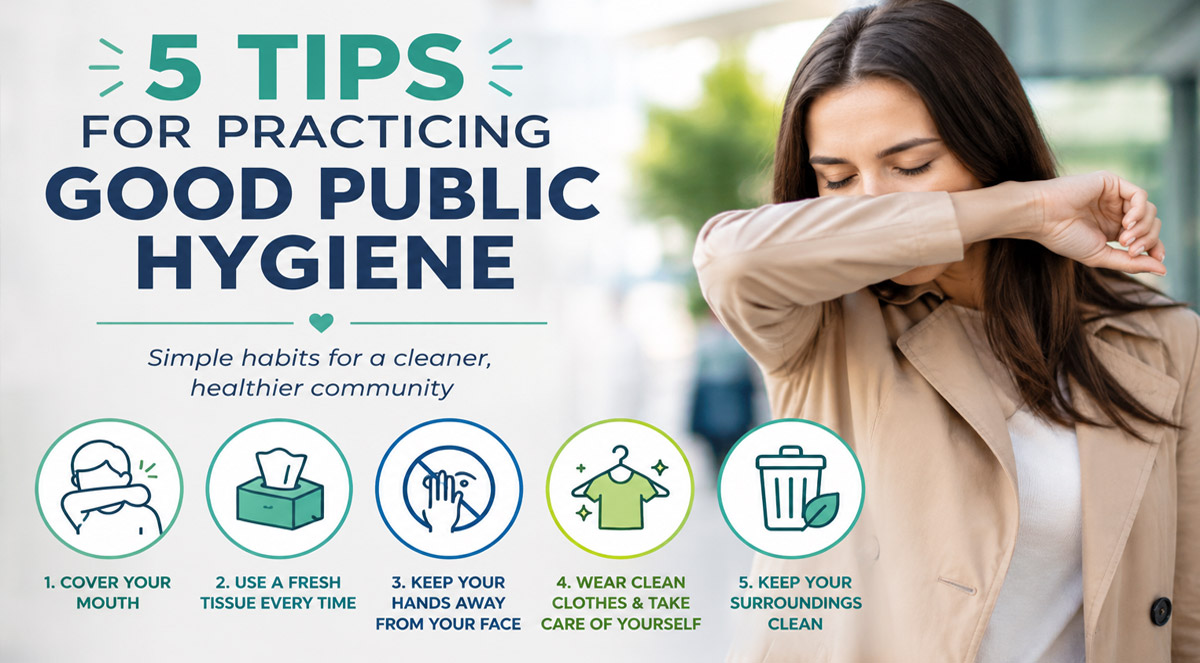
Good public hygiene is about more than simply looking clean and presentable. The everyday habits we practice in public can help reduce the spread of germs, protect our health, and make shared spaces more comfortable for everyone.
Most of us learn basic hygiene habits when we are young, but it is easy to become careless when we are busy, distracted, or simply not thinking about it. Fortunately, maintaining good public hygiene doesn’t have to be complicated.
Here are five simple habits that can help you stay clean, considerate, and comfortable whenever you’re out in public.
1. Cover Your Mouth When You Cough or Sneeze
One of the simplest and most important public hygiene habits is covering your mouth and nose when you cough or sneeze.
Whenever possible, use a tissue. If one isn’t available, cough or sneeze into the inside of your elbow rather than your hands. Using your hands can transfer germs to door handles, phones, shopping carts, desks, and other surfaces that people frequently touch.
If you do cough or sneeze into your hands, wash them with soap and water as soon as possible or use hand sanitizer when washing isn’t immediately convenient.
A small habit like this can make a meaningful difference in shared environments.
2. Use a Fresh Tissue Every Time
If you’re dealing with a cold, allergies, or another respiratory illness, keeping tissues nearby can make public situations much easier.
However, don’t reuse the same tissue throughout the day. Used tissues can contain germs and should be thrown away after use. After blowing your nose, wash your hands or use an alcohol-based hand sanitizer if soap and water aren’t available.
It’s also a good idea to avoid leaving used tissues on tables, counters, desks, or other public surfaces. Dispose of them properly and keep your surroundings clean.

If you’re feeling particularly unwell, consider staying home when possible. Giving your body time to recover can also help protect the people around you.
3. Keep Your Hands Away From Your Face
We touch our faces far more often than we may realize. Rubbing our eyes, touching our nose, biting our nails, or running our hands through our hair can transfer dirt, oils, and germs between our hands and our face.
Your hands also come into contact with many shared surfaces throughout the day, including door handles, elevator buttons, phones, keyboards, shopping carts, and public transportation.
Try to become more aware of unnecessary face-touching, particularly when you’re in crowded or shared environments. Keeping your hands clean is important, but reducing unnecessary contact with your face can be another helpful hygiene habit.
4. Wear Clean Clothes and Take Care of Personal Grooming
Good public hygiene also includes keeping your clothes and personal belongings clean.
Wearing fresh clothes regularly, changing socks and underwear, and washing clothing according to its care instructions can help you feel more comfortable and confident when you’re out. Regularly washing jackets, coats, hats, and other frequently worn items is also worthwhile when they become dirty.
Personal grooming matters too. Regular bathing, brushing your teeth, washing your hair, and keeping your nails clean all contribute to good everyday hygiene.
You don’t need an elaborate routine. Consistency is what makes the biggest difference.
5. Keep Your Surroundings Clean
Public hygiene isn’t only about your own body. It’s also about respecting the people who share the spaces around you.
Avoid leaving food wrappers, tissues, bottles, or other waste behind. If you use a public restroom, leave it clean for the next person. When eating or drinking in a shared space, clean up after yourself rather than expecting someone else to do it.
It’s also helpful to practice good hand hygiene after using public transportation, visiting busy public spaces, handling potentially dirty surfaces, or before eating.
A few extra seconds of consideration can make shared environments cleaner and more pleasant for everyone.
Small Habits Make a Big Difference
Good public hygiene doesn’t require complicated rules or expensive products. Simple habits such as washing your hands regularly, covering coughs and sneezes, using fresh tissues, wearing clean clothes, and keeping shared spaces tidy can go a long way.
Most importantly, remember that hygiene in public isn’t just about protecting yourself. It’s also a way of showing consideration for the people around you.
When everyone makes an effort to practice good hygiene, public spaces become cleaner, healthier, and more comfortable for everyone.