

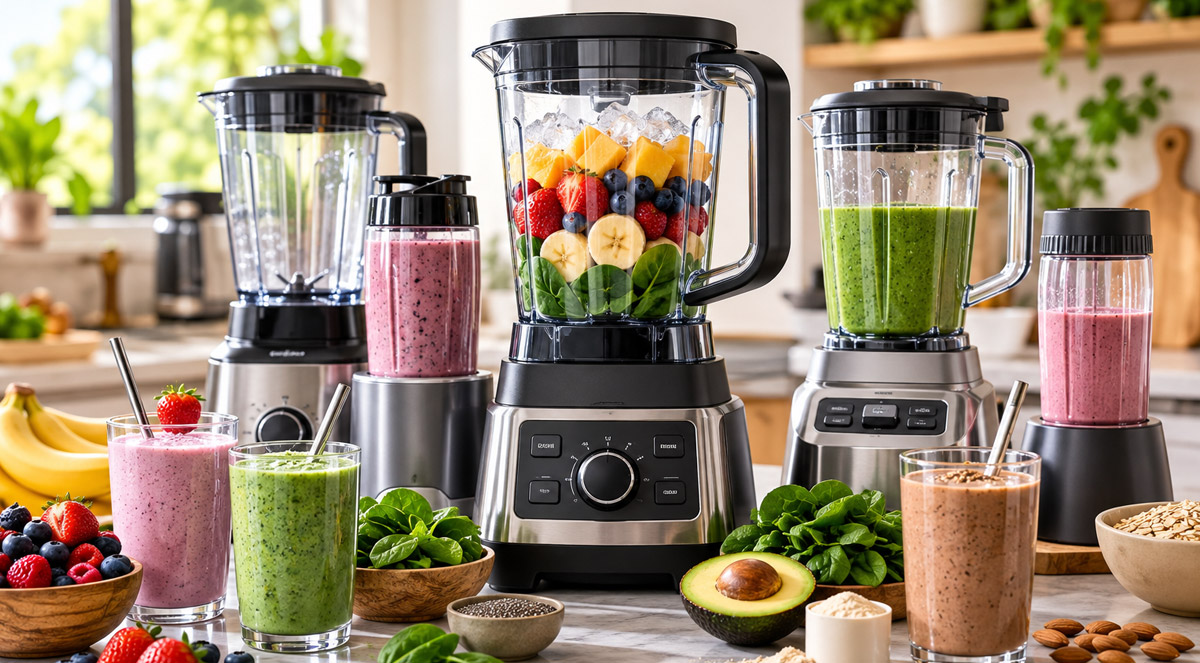
A good blender can make healthy eating a whole lot easier.
Whether you’re making a post-workout protein shake, a breakfast smoothie, a green smoothie packed with fruit and vegetables, or a frozen treat, the right blender can turn a handful of ingredients into a smooth drink in seconds. But not every blender performs equally well with frozen fruit, ice, leafy greens, protein powder, oats, or nut butter.
That’s why we looked beyond wattage and price when putting together this list.
For this comparison, we considered blending power, container size, versatility, convenience, portability, cleaning, and overall value. We also included options at several price points, from affordable everyday blenders to premium machines designed for years of heavy use.
Prices can change frequently, so consider the prices below a snapshot rather than a guarantee of the current selling price.
Our Top Picks
| Blender | Best For | Listed Price |
| Ninja BN751 Pro Plus DUO | Best Overall | $129.97 |
| Vitamix VX1 | Best Premium Blender | $329.95 |
| NutriBullet NBF50500IN | Best Budget Full-Size Blender | $89.99 |
| Ninja BL660 Professional | Best Value | $119.99 |
| Breville Q BBL820 | Best High-Performance Alternative | $249.95 |
| Beast Mega 1200 | Best for Fitness-Focused Users | $219.00 |
| Oster Pro 1200 | Best Glass-Pitcher Option | $129.99 |
| Cleanblend 2001 | Best Power for the Money | $179.97 |
| Ganiza GB08 | Best Versatile Budget Option | $79.99 |
1. Ninja BN751 Pro Plus DUO — Best Overall
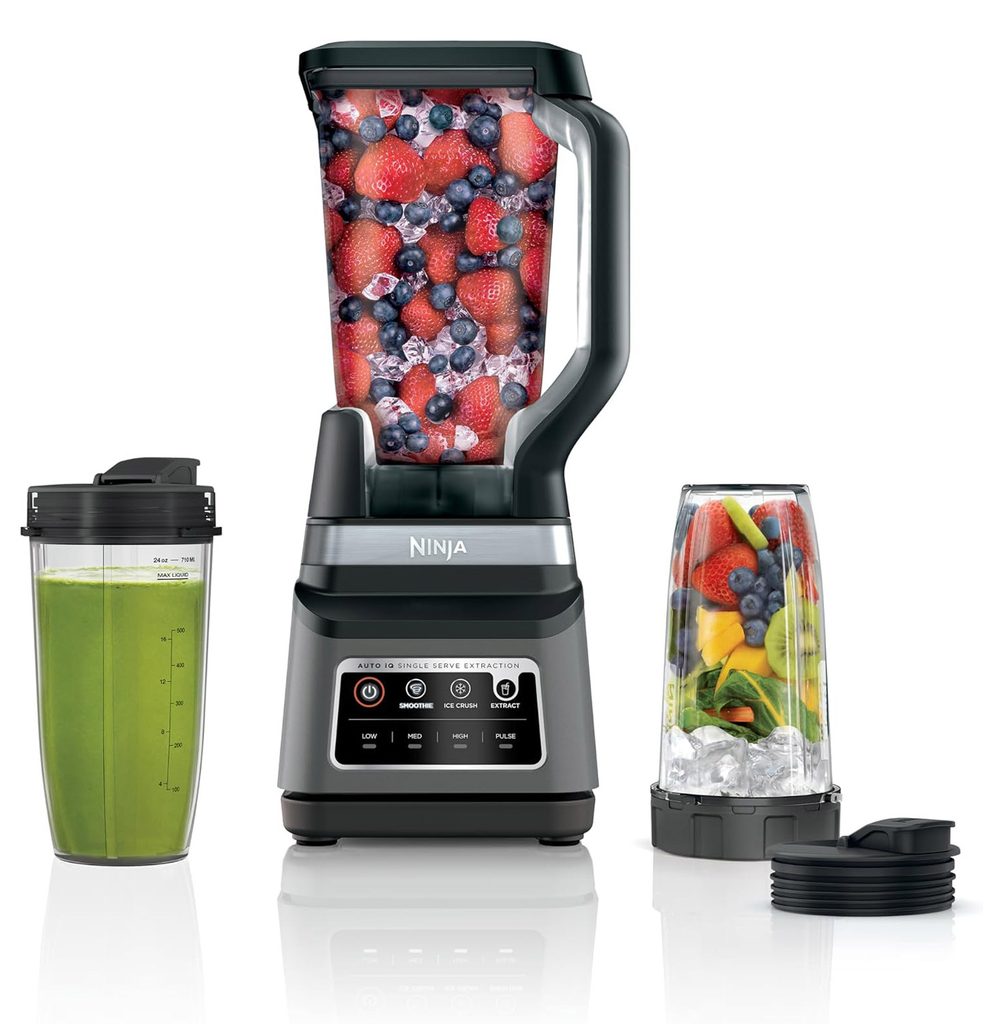
The Ninja BN751 Professional Plus DUO is probably the easiest recommendation for most people looking for a blender primarily for smoothies and protein shakes.
It combines a 1,400-peak-watt motor with a 72-ounce Total Crushing pitcher and two 24-ounce single-serve cups. The pitcher has a 64-ounce maximum liquid capacity, while the single-serve cups let you make an individual smoothie without using the large container. Ninja’s Auto-iQ programs also automate the pulsing and blending pattern for smoothies, frozen drinks, and nutrient extraction.
That combination makes the BN751 particularly practical for households where different people use the blender differently. You can make a large batch of smoothies for the family or prepare a single post-workout shake to take with you.
The biggest advantage here is balance. You’re getting plenty of power, a large pitcher, personal cups, preset programs, and dishwasher-safe components without moving into premium-blender pricing.
Best for: Most people, families, smoothies, protein shakes, and frozen ingredients.

Why we like it: Excellent combination of power, capacity, accessories, and price.
Check the current price on Amazon
2. Vitamix VX1 — Best Premium Blender
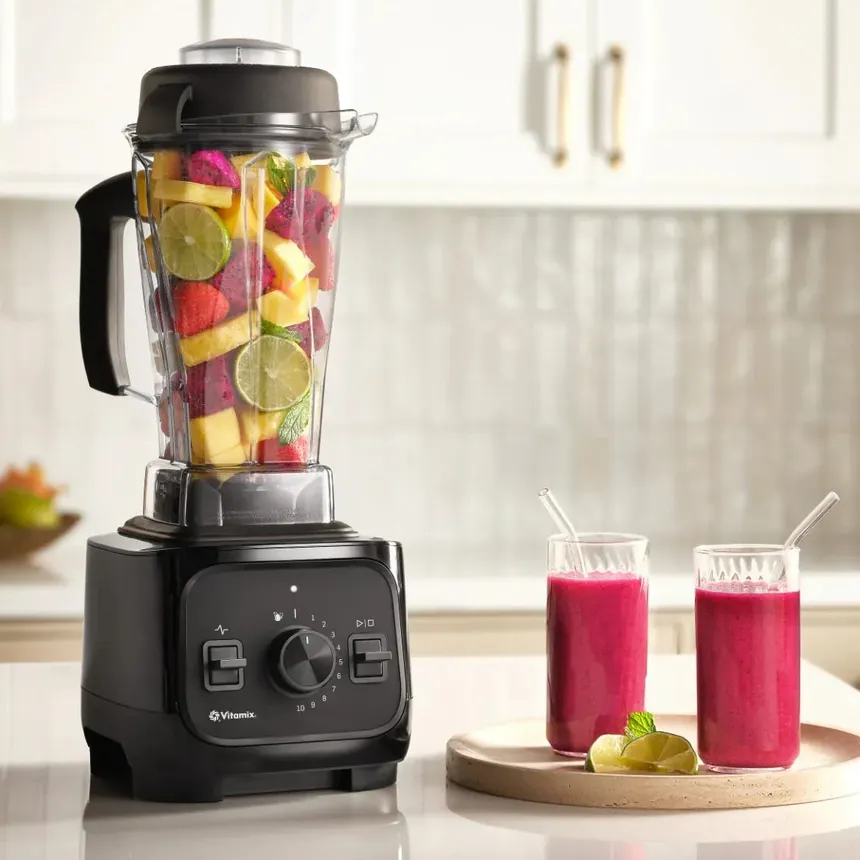
If you want something designed for serious, long-term use, the Vitamix VX1 is the standout premium option in this group.
The VX1 is a new entry-level Vitamix introduced in 2026, but it still carries many of the characteristics that have made Vitamix such a recognizable name in high-performance blending. It has a 2.2 HP motor rated at 1,440 watts, a 64-ounce container, variable-speed control, pulse functionality, stainless-steel blades, and a self-cleaning program. It also comes with a five-year limited warranty.
The 64-ounce container makes it suitable for everything from individual smoothies to larger batches. And unlike some high-powered blenders that rely heavily on automatic programs, the VX1 gives you direct control over blending speed.
Independent testing gives this model an impressive vote of confidence. Bon Appétit tested more than 35 blenders and named the VX1 its best blender overall in its 2026 testing.
The obvious drawback is price. At more than twice the price of some of the excellent Ninja and NutriBullet options on this list, it isn’t necessary for someone who simply wants to make a protein shake every morning.
But if you’re looking for a blender that can become a long-term kitchen workhorse, the VX1 makes a compelling case.
Best for: Serious home cooks, frequent smoothie makers, and people willing to pay more for premium construction and performance.
Why we like it: Powerful motor, excellent control, self-cleaning program, large container, and a five-year warranty.
Check the current price on Amazon
3. NutriBullet NBF50500IN — Best Budget Full-Size Blender
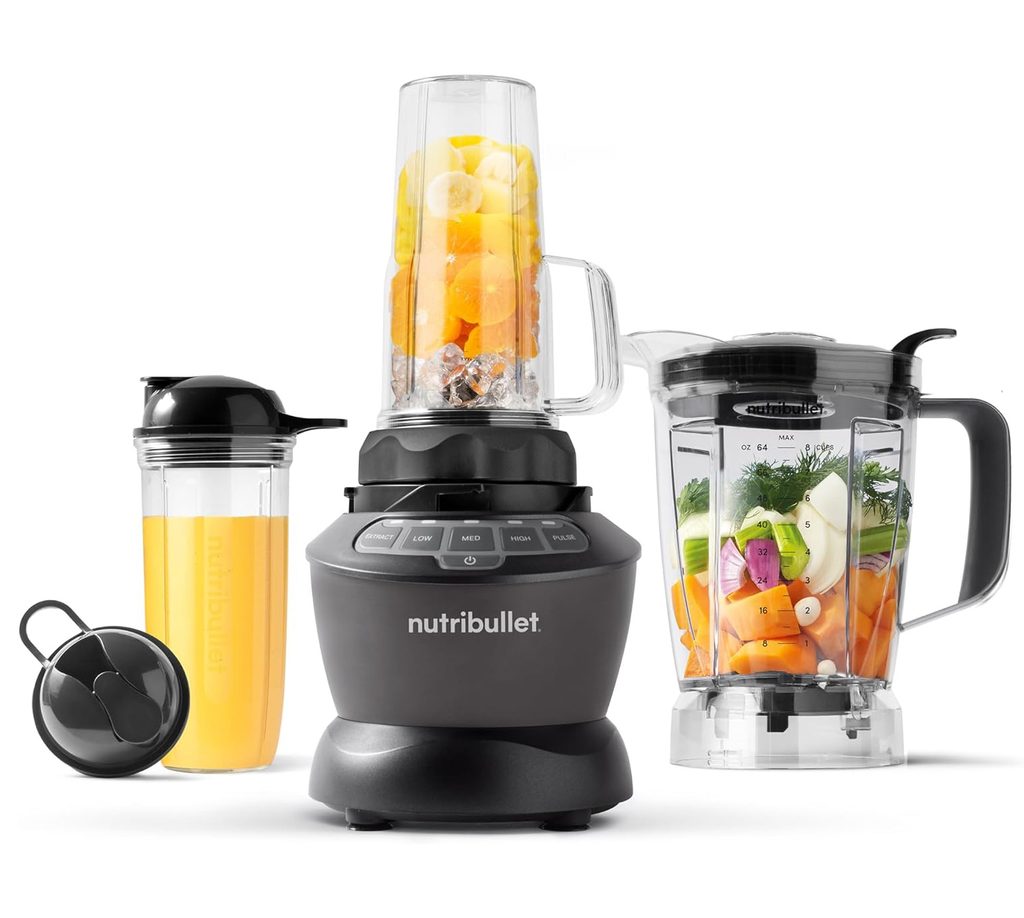
The NutriBullet NBF50500IN is one of the most interesting options if you want a full-size blender without spending a lot.
It features a 1,200-watt motor and a 64-ounce pitcher, along with multiple speeds, pulse functionality, extraction capability, and a vented lid for hot ingredients.
At the listed price of $89.99, it occupies an attractive position between inexpensive personal blenders and substantially more expensive countertop machines.
For smoothie drinkers, the 64-ounce capacity is particularly useful. You can make a large batch instead of blending individual portions one at a time, while the 1,200-watt motor provides plenty of power for everyday frozen fruit, vegetables, and protein-shake ingredients.
It’s not trying to compete directly with a $300-plus Vitamix. Instead, it does something arguably more useful for many households: it provides a good amount of capacity and functionality at a much lower price.
Best for: Budget-conscious shoppers who want a full-size blender.
Why we like it: Large 64-ounce pitcher, 1,200-watt motor, multiple speeds, pulse, and a very approachable price.
Check the current price on Amazon
4. Ninja BL660 Professional — Best Value
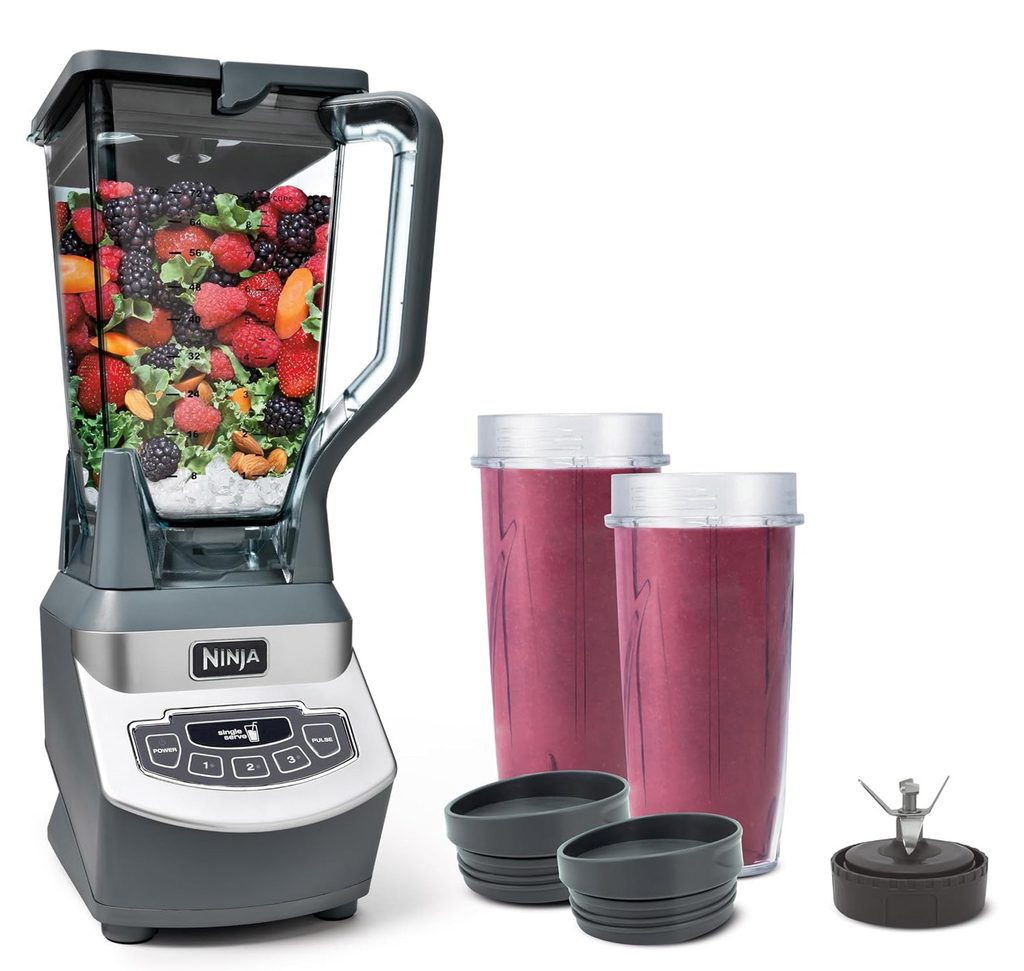
The Ninja BL660 Professional is an older design, but that doesn’t make it irrelevant.
Its 1,100-watt motor, 72-ounce pitcher, Total Crushing blades, and two 16-ounce Nutri Ninja cups give you many of the things people actually need for smoothies and shakes. Ninja specifies a 64-ounce maximum liquid capacity for the pitcher, and the parts are BPA-free and dishwasher-safe.
Compared with the BN751, the BL660 gives up some power and the newer Auto-iQ functionality. But that may not matter if you’re comfortable controlling the blender yourself.
This is the sort of blender that makes sense for someone who doesn’t need a long list of smart features. Add your ingredients, choose a speed, blend, and you’re done.
The two personal cups are particularly useful for people who frequently make individual shakes.
Best for: Shoppers who want a straightforward, powerful blender without paying for newer features.
Why we like it: Proven design, large pitcher, personal cups, strong ice-crushing capability, and simple controls.
Check the current price on Amazon
5. Breville Q BBL820 — Best High-Performance Alternative
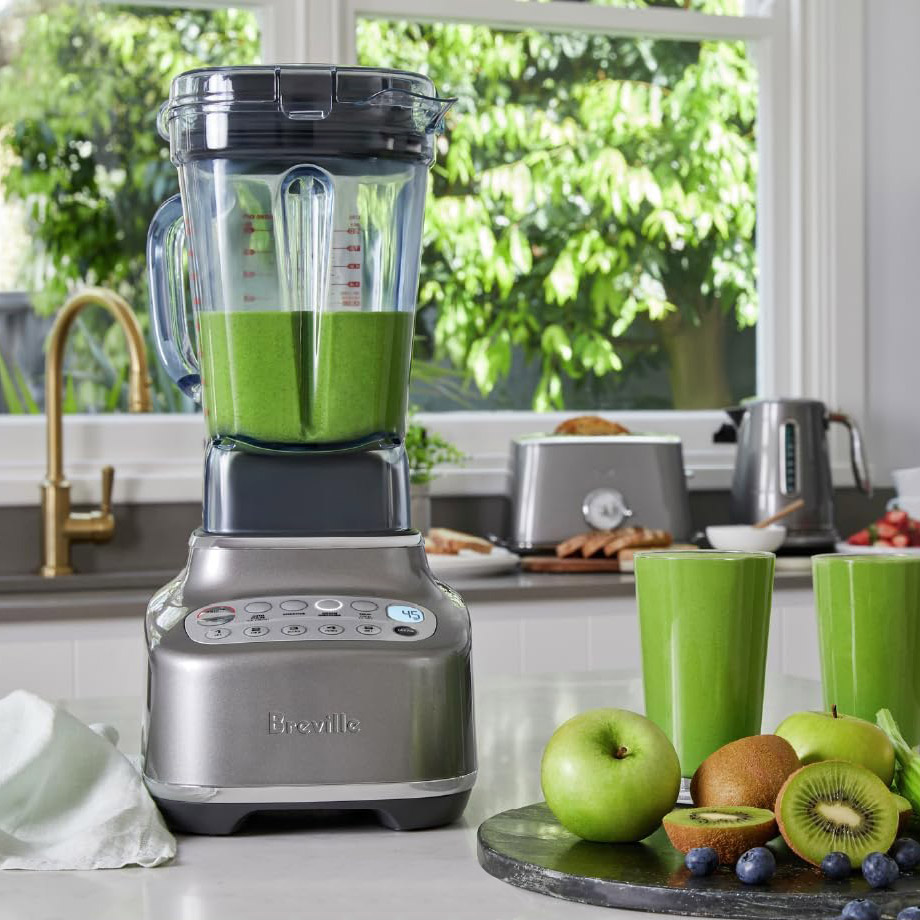
The Breville Q is the premium-performance alternative for people who want serious power but prefer Breville’s approach to blending.
The BBL820 uses an 1,800-watt motor and includes four one-touch programs, including dedicated smoothie programs and an ice-crush setting. It also has five speed settings and an auto-clean function. Breville says the blender is designed to optimize texture for smoother results.
This is a particularly interesting choice for people who want their blender to do more than protein shakes. The Q is designed for everything from smoothies and frozen drinks to nut butters, sauces, dips, and plant-based milks.
The 1,800-watt motor also puts it firmly into the high-performance category.
At the supplied $249.95 price, it sits between the Ninja options and the Vitamix VX1, making it an intriguing middle ground.
One thing to note is that the current Breville US listing shows a higher price, so shoppers should check the current Amazon price before buying.
Best for: People who want high performance and versatility without stepping all the way up to the most expensive premium models.
Why we like it: 1,800 watts, smoothie programs, ice-crush function, multiple speeds, and auto-cleaning.
Check the current price on Amazon
6. Beast Mega 1200 — Best for Fitness-Focused Users
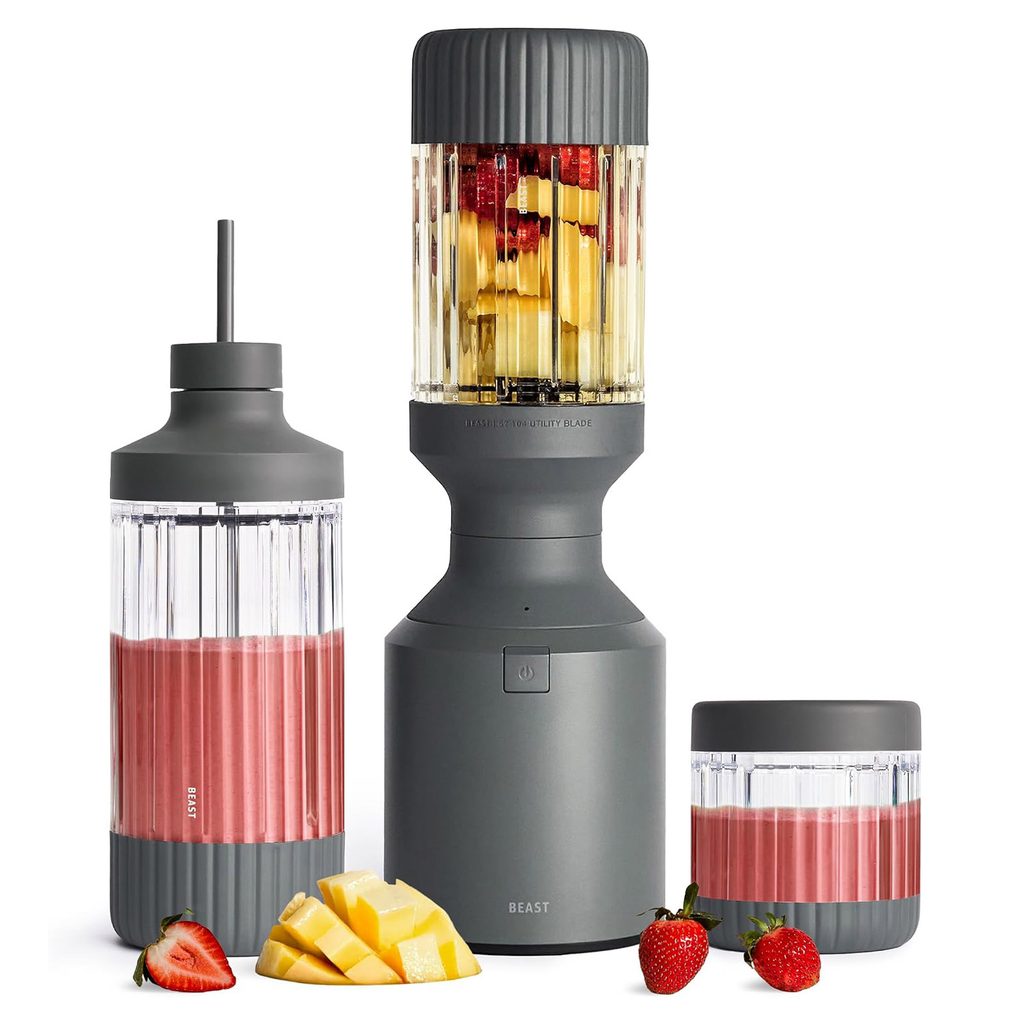
The Beast Mega 1200 is probably the blender on this list that feels most naturally connected to a fitness and nutrition lifestyle.
It uses a 1,200-watt motor and comes with multiple blending vessels rather than relying exclusively on one large traditional pitcher. The Mega 1200 system includes 500 ml, 1,000 ml, and 1,200 ml vessels, along with storage and drinking accessories. BEAST specifically positions it for smoothies, meal prep, and nutrition-focused users.
That makes a difference if most of your blending consists of protein shakes, smoothies, and smaller batches rather than family-sized recipes.
The vessel system also gives the BEAST a more lifestyle-oriented feel. You can blend, store, and drink without necessarily transferring everything into another container.
The downside is that this isn’t the obvious choice for someone who regularly needs a huge pitcher. Its largest included vessel is 1,200 ml, which is considerably smaller than the 64-ounce containers found on several other models here.
Best for: Fitness enthusiasts, smoothie lovers, and people who regularly make individual or small-batch drinks.
Why we like it: Fitness-oriented design, multiple vessels, drinking and storage accessories, and a 1,200-watt motor.
Check the current price on Amazon
7. Oster Pro 1200 — Best Glass-Pitcher Option
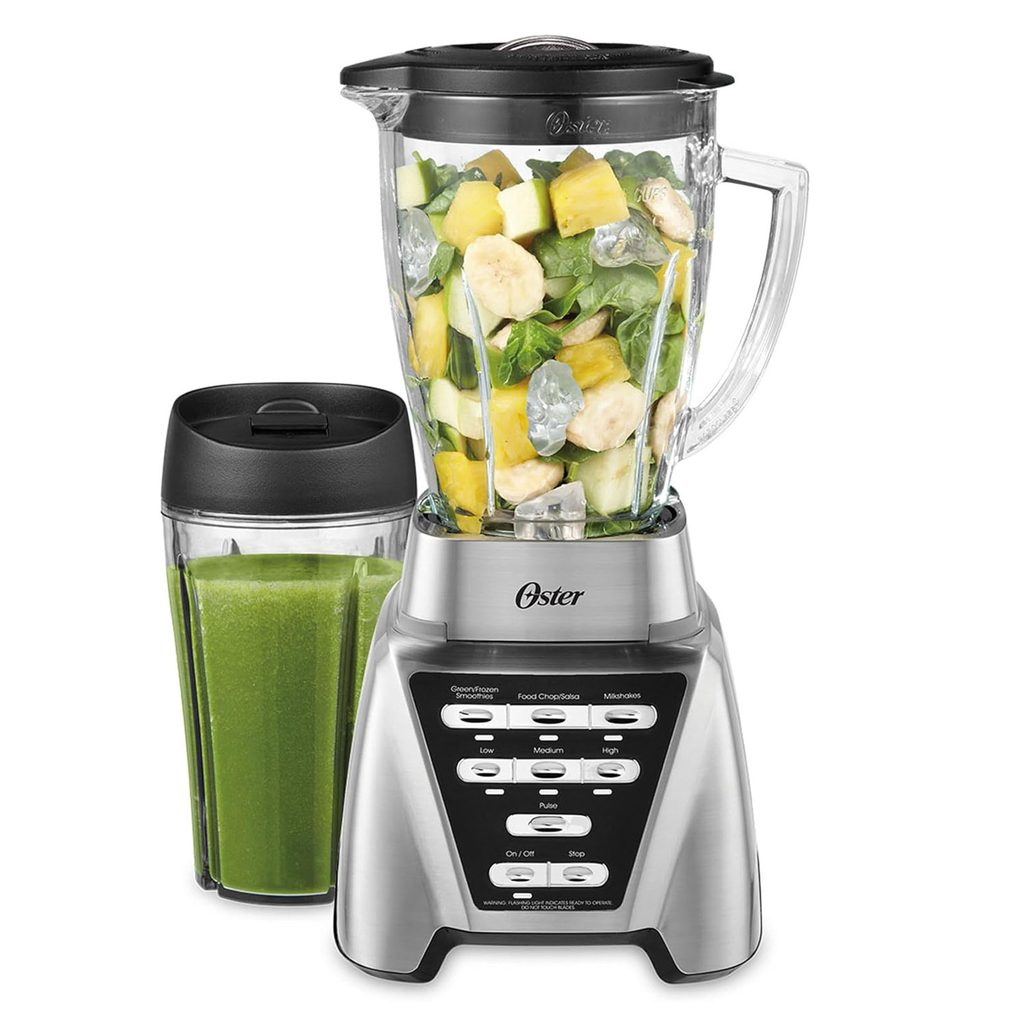
The Oster Pro 1200 offers something that most of the other blenders in this comparison don’t: a glass pitcher.
The BLSTMB-CBG-000 uses a six-cup Boroclass glass jar, a 1,200-watt motor, seven speeds, three pre-programmed settings, and a 24-ounce smoothie cup.
The glass pitcher is worth considering if you simply prefer glass over plastic. It also gives the Oster a different character from the many Tritan/plastic-container models in this category.
For smoothies, protein shakes, frozen fruit, and everyday blending, the Oster offers plenty of capability without requiring a premium investment.
Its seven-speed control also gives you more manual adjustment than some budget-oriented models.
The tradeoff is that glass is heavier than plastic, so this isn’t necessarily the best choice if you’re constantly moving the pitcher around.
Best for: People who prefer glass containers and want a versatile everyday blender.
Why we like it: Glass pitcher, 1,200-watt motor, seven speeds, preset programs, and included smoothie cup.
Check the current price on Amazon
8. Cleanblend 2001 — Best Power for the Money
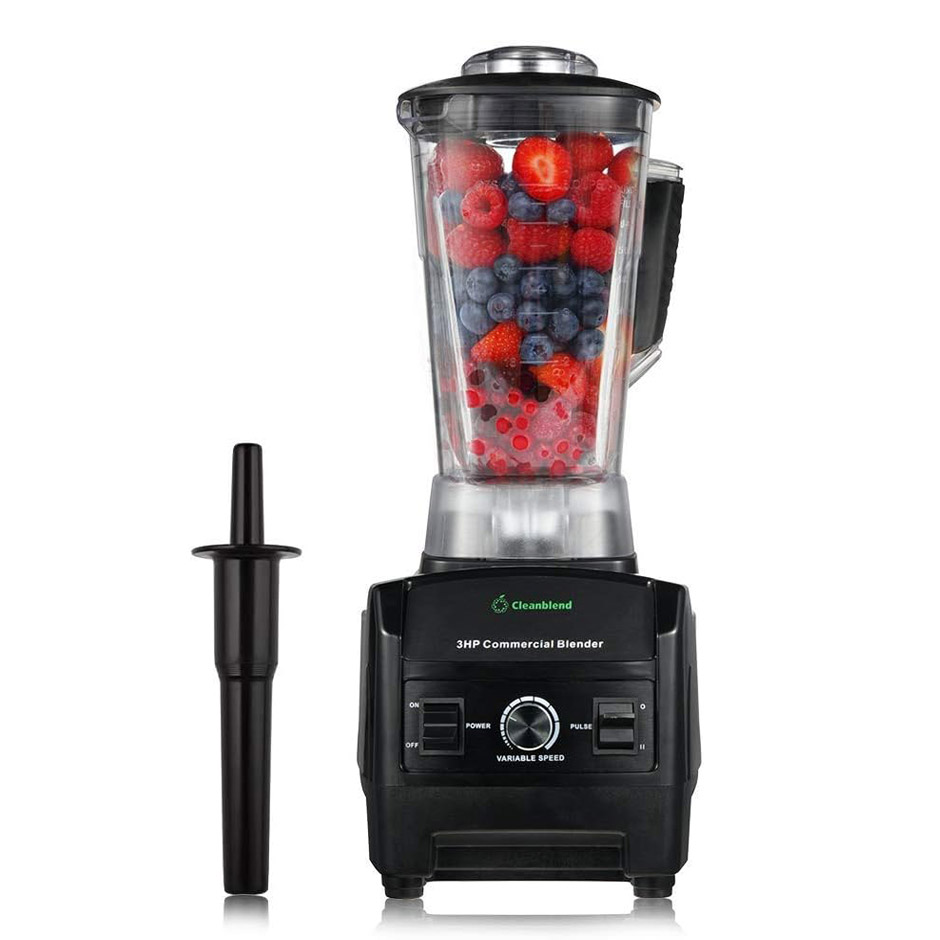
The Cleanblend 2001 is an interesting alternative to the big-name brands.
It uses a 1,800-watt, 3-HP motor and a 64-ounce container, with variable-speed control and a simple design that focuses on raw blending power rather than lots of automated programs. Independent testing has previously found the CleanBlend notably powerful and particularly good for its price category.
In other words, this is the blender for someone who looks at all the buttons and programs on modern appliances and thinks, “I just want the thing to blend.”
That simplicity can actually be appealing.
The Cleanblend doesn’t have the brand recognition of Vitamix, Ninja, or Breville, and it doesn’t offer the same polished feature set as some newer competitors. But the combination of a powerful motor, 64-ounce container, and straightforward variable-speed control makes it an intriguing choice.
Best for: People who prioritize motor power and simple manual control.
Why we like it: 1,800 watts, 3-HP motor, 64-ounce container, and straightforward controls.
Check the current price on Amazon
9. Ganiza GB08 — Best Versatile Budget Option
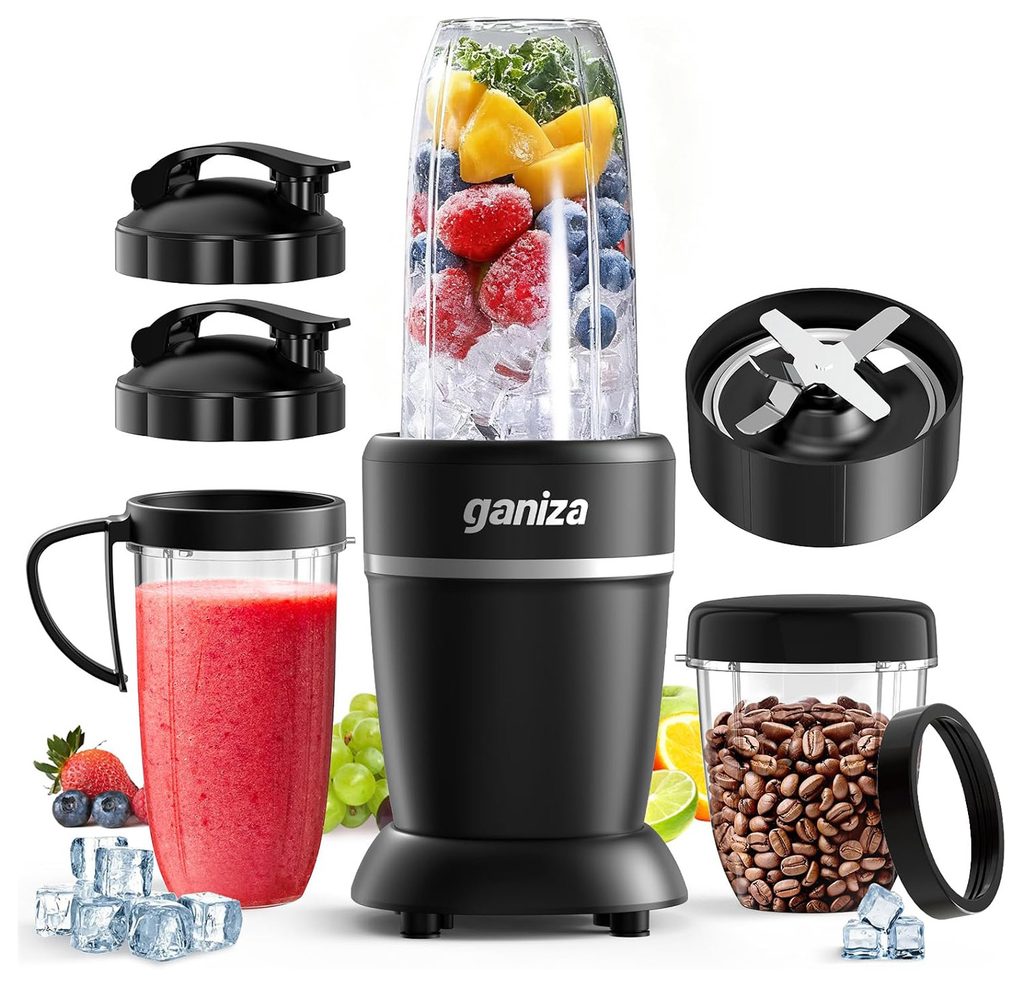
The Ganiza GB08 is the wildcard in our selection.
At the listed $79.99 price, it’s considerably cheaper than many of the better-known models here, but the feature set is surprisingly broad. The GB08 uses a 1,300-watt motor and includes multiple blending vessels, including two larger 1,100 ml cups and a smaller 660 ml cup.
That makes it particularly interesting for people who don’t want to spend $100–$300 on a blender but still want flexibility for smoothies and individual drinks.
It’s also a good example of why wattage alone shouldn’t determine your purchase. A 1,300-watt budget blender may look impressive on paper, but long-term durability, blending consistency, noise, and after-sales support are harder to judge from specifications alone.
For that reason, we’d put the Ganiza in the “interesting value option” category rather than automatically calling it better than the established brands.
Best for: Budget shoppers who want multiple vessels and plenty of power for the price.
Why we like it: 1,300-watt motor, multiple cup sizes, and a very affordable entry price.
Check the current price on Amazon
What Should You Look for in a Blender for Protein Shakes?
You don’t necessarily need the most powerful blender available to make a good protein shake.
If your usual recipe is protein powder, milk or water, and a banana, almost any decent blender can handle the job. The situation changes when you start adding frozen fruit, ice, oats, leafy greens, nut butter, seeds, or other dense ingredients.
That’s when motor power and blade design become more important.
Consider the size of your usual servings
If you’re making smoothies for the whole family, a full-size 64- or 72-ounce pitcher makes much more sense.
If you’re usually making one post-workout shake, a blender with personal cups can be considerably more convenient.
That’s one reason the Ninja BN751 and BEAST are particularly interesting for fitness-focused users: they approach individual drinks differently.
Don’t judge a blender only by wattage
A higher wattage number doesn’t automatically mean a better blender.
Blade design, container shape, motor control, speed settings, and the way ingredients circulate inside the container all affect the finished smoothie.
That’s why we wouldn’t automatically choose the 1,800-watt Breville or CleanBlend over a 1,200- or 1,400-watt Ninja or NutriBullet.
Think about frozen ingredients
If you regularly use frozen berries, frozen bananas, or ice, make sure the blender is designed to handle them.
Ninja’s Total Crushing systems, for example, are specifically designed around ice and frozen ingredients, while the Vitamix VX1 is built for high-performance blending of tough ingredients.
Cleaning matters more than you think
A blender can make healthy eating easier — but only if you’re willing to use it regularly.
Dishwasher-safe components and self-cleaning programs can make a meaningful difference when you’re making smoothies several times a week. The Ninja BN751 has dishwasher-safe components, while the Vitamix VX1 includes a self-cleaning program.
Do You Really Need an Expensive Blender for Protein Shakes?
No.
If your primary goal is mixing protein powder with milk, water, fruit, or a few other soft ingredients, spending $300 or more isn’t necessary.
A model such as the NutriBullet NBF50500IN or Ninja BL660 can provide plenty of capacity and power for everyday smoothies without approaching premium-blender prices.
The reason to spend more is usually versatility and long-term performance, not simply the ability to make a protein shake.
A premium blender becomes more attractive if you regularly make large batches, blend tough ingredients, prepare nut butters or plant milks, make soups and sauces, or simply want a machine designed for frequent heavy use.
That’s where something like the Vitamix VX1 starts to make more sense.
Final Verdict
For most people, the Ninja BN751 Professional Plus DUO is the easiest blender to recommend. It offers a strong combination of power, large capacity, personal cups, automatic programs, and a reasonable price.
If money isn’t the main concern and you want something built for long-term use, the Vitamix VX1 is the premium choice. Its powerful motor, variable speed control, self-cleaning program, 64-ounce container, and five-year warranty make it much more than a dedicated smoothie machine. Independent testing also gives it a strong vote of confidence.
For shoppers on a tighter budget, the NutriBullet NBF50500IN stands out because it gives you a full-size 64-ounce pitcher and 1,200 watts without pushing the price into premium territory.
And if your blender is going to live primarily in your fitness routine, the Beast Mega 1200 deserves a serious look because its multiple vessels and drink-oriented design are particularly well suited to smoothies and post-workout shakes.
Ultimately, the best blender isn’t necessarily the one with the biggest motor or highest price tag. It’s the one you’ll actually use several times a week — and that makes the right combination of capacity, convenience, performance, and price more important than any single specification.